
Level Measurement For Powder, Granules And Bulk Solid Storage
Powder, granules and bulk solid storage systems require reliable level measurement for silos, bins, hoppers, tanks and automated feeding systems. SHAO provides level measurement solutions for cement powder, grain, plastic pellets, feed materials, fly ash, mineral powder, food ingredients, lime powder, sand, gravel and other bulk solid applications.
Why Bulk Solid Level Measurement Requires Careful Selection
Powder, granules and bulk solids behave very differently from liquids. Materials may create dust, buildup, bridging, uneven surfaces, abrasion, low density, irregular reflection or fast filling and discharge conditions. A suitable level measurement solution should consider the material type, particle size, density, dust level, silo height, installation position, measuring range and whether the application needs continuous measurement or point level alarm.
Typical Materials And Storage Conditions
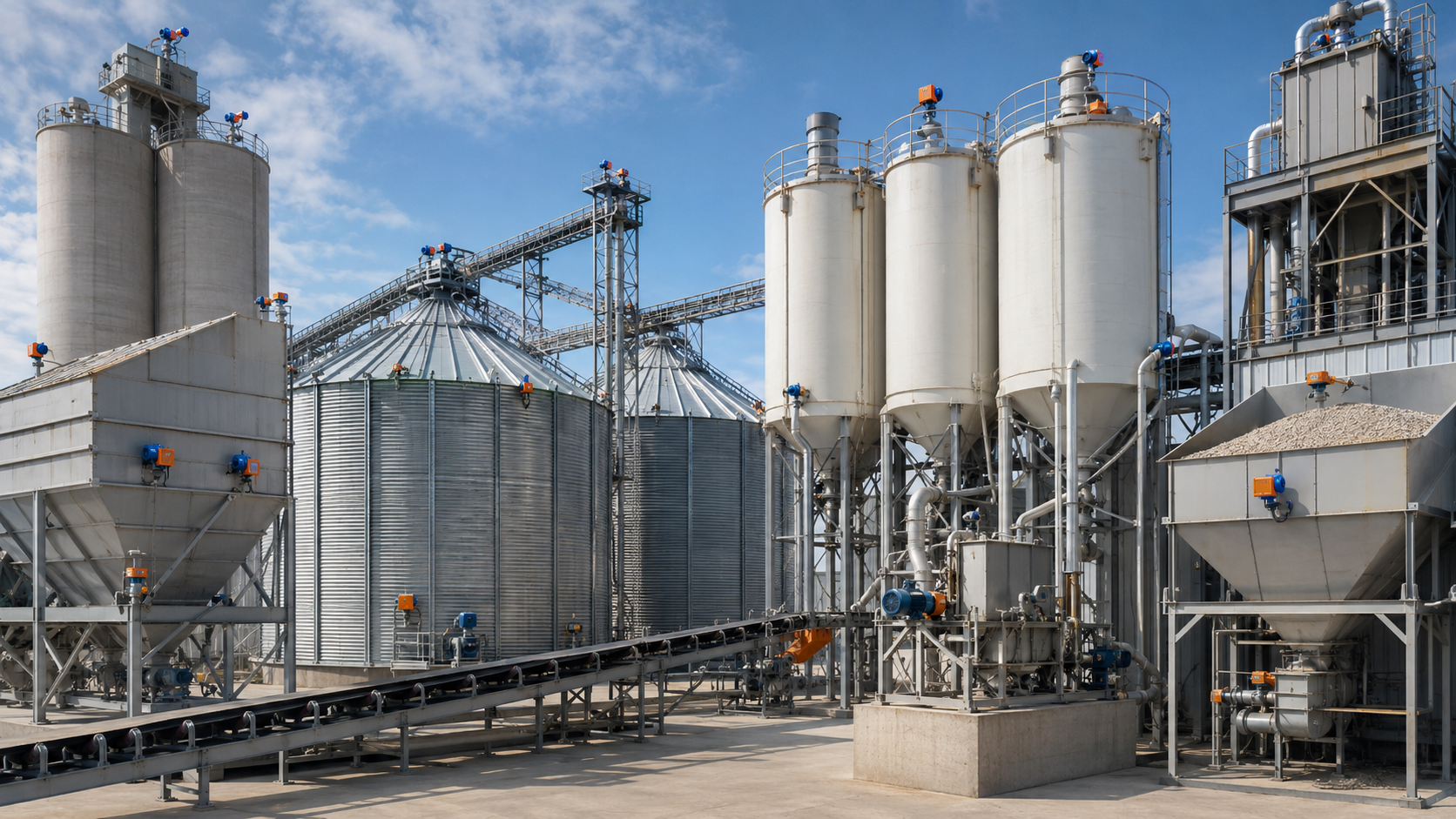
SHAO level measurement solutions can support industrial silos, storage bins, batching hoppers, transfer systems, raw material storage and automated production lines.
Industrial Powders
Level measurement for cement powder, lime powder, fly ash, mineral powder, coal powder and dry powder materials.
Granules And Pellets
Monitoring for plastic pellets, feed pellets, grain, seeds, granules and other free-flowing bulk solids.
Food And Feed Materials
Level control for flour, starch, milk powder, sugar, coffee, animal feed, premix and ingredient storage bins.
Mineral And Building Materials
Measurement support for sand, gravel, aggregate, crushed stone, dry mortar, filler and mineral mixtures.
Recycled And Irregular Materials
Level monitoring for PET flakes, recycled plastic flakes, lightweight materials and irregular bulk solids.
Batching And Feeding Systems
Level alarm and control for batching bins, weighing hoppers, transfer silos and automated feeding systems.
Main Challenges In Powder And Bulk Solid Measurement
Bulk solid measurement is often affected by the material itself and the way it is stored, filled and discharged. The sensor should match the real silo or hopper condition.
Powders may create heavy dust during filling and discharge.
Material surfaces may be uneven, conical or sloped inside silos.
Buildup may occur on silo walls, sensor surfaces or probes.
Some materials may bridge, stick or flow poorly in hoppers.
Abrasive solids such as sand, gravel and mineral materials require durable selection.
Large silos may require long measuring range and stable signal performance.
Selection Focus For Bulk Solid Applications
Recommended Solutions By Application
| Application | Material Type | Main Challenge | Suggested Solution |
|---|---|---|---|
| Powder Silo | Cement, lime, fly ash, mineral powder | Dust, buildup, long range | Radar level meter or solid level switch |
| Granule Storage | Plastic pellets, feed pellets, grain | Uneven surface and inventory control | Radar level measurement or point alarm |
| Food Powder Bin | Flour, starch, milk powder, sugar | Fine dust, adhesion, hygiene concern | Radar level meter or capacitance level sensor |
| Aggregate Hopper | Sand, gravel, crushed stone, aggregate | Abrasion, impact, irregular surface | Heavy-duty level switch or radar level meter |
| PET Flake Storage | PET flakes, recycled plastic, lightweight material | Irregular shape and low density | Radar measurement or level switch |
| Batching Hopper | Powder, granule, pellet, mixed material | Frequent filling and discharge | Level switch with alarm output |
Suitable Level Measurement Technologies
Radar Level Meter
Suitable for non-contact continuous measurement in silos, bins, hoppers and bulk solid storage tanks.
Solid Level Switch
Used for high-level alarm, low-level alarm, overflow prevention and material shortage warning.
Capacitance Level Sensor
Can be considered for certain powders, granules, compact bins and point level detection applications.
Level Control System
Supports inventory monitoring, batching control, alarm output, feeding control and automation connection.
What Information Is Needed Before Selection?
Bulk solid applications require sensor selection based on material behavior, silo structure and control objective.
Related Bulk Solid Application Areas
Cement And Building Materials
Level measurement for cement silos, lime powder bins, sand hoppers and dry mortar systems.
View Application →Agriculture And Grain Storage
Level monitoring for grain silos, corn storage, wheat silos, seed bins and bulk agricultural storage.
View Application →Animal Feed Production
Level control for feed powder bins, grain raw materials, pellet silos and batching systems.
View Application →Plastic Pellets And Powder Handling
Level measurement for plastic pellets, powder bins, PET flakes and central feeding systems.
View Application →Power Plants And Fly Ash
Level measurement for fly ash silos, coal powder bins, coal bunkers and ash handling systems.
View Application →Food And Beverage Processing
Level control for flour, starch, milk powder, sugar, coffee and food ingredient storage bins.
View Application →Frequently Asked Questions
What level sensor is suitable for powder silos?
Radar level meters are often used for continuous powder silo measurement, while solid level switches can be used for high-level or low-level alarm. The final selection depends on dust, buildup, silo height and measuring range.
Can radar level meters measure bulk solids?
Yes. Radar level meters can be used for many bulk solid applications, including cement, grain, plastic pellets, fly ash and mineral powder. Material surface, dust level and installation position should be confirmed before selection.
What is the difference between continuous level measurement and point level alarm?
Continuous level measurement shows the material level or inventory trend, while point level alarm detects whether the material reaches a specific high or low point. Many plants use both methods together.
How do dust and buildup affect bulk solid level measurement?
Dust may weaken signal performance, and buildup may affect the sensor surface or detection area. Correct sensor type, installation position and maintenance access are important for stable measurement.
What information should I provide before requesting a quotation?
Please provide material type, silo height, silo diameter, measuring range, dust condition, filling method, discharge method, installation position, output signal and whether continuous measurement or point alarm is required.