
In modern industrial automation, accurate and reliable detection is essential for ensuring production efficiency and operational safety. The photoelectric sensor is one of the most widely used sensing technologies in industrial environments because of its high precision, fast response, and non-contact detection capability.
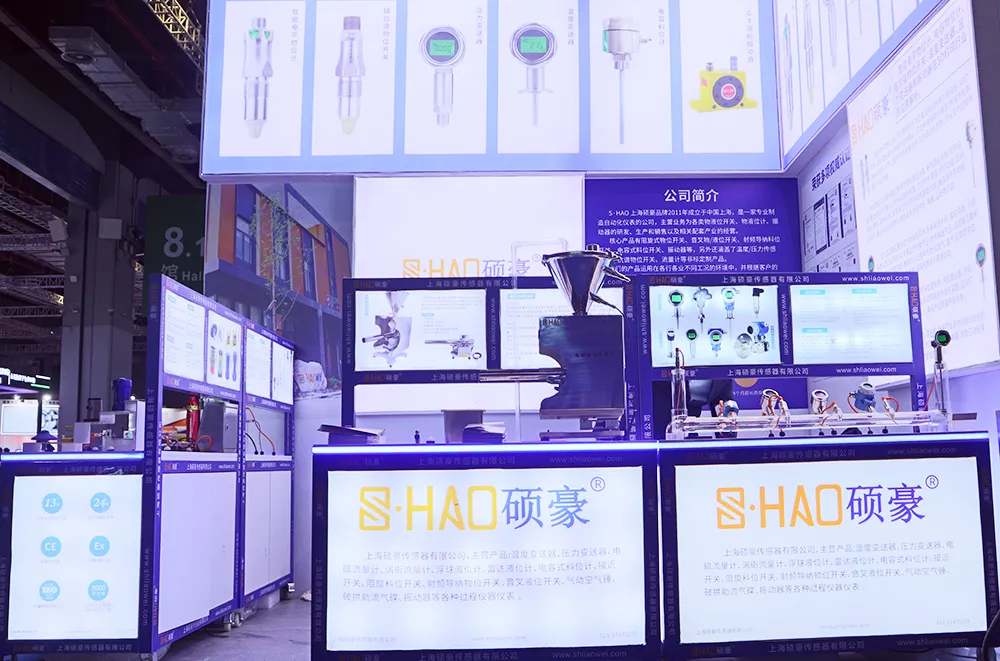
At the exhibition, Shuohao (S·HAO) presented its advanced photoelectric sensing technology, demonstrating how non-contact optical detection can improve the reliability and efficiency of industrial automation systems.
What Is a Photoelectric Sensor?
A photoelectric sensor is a type of sensor that can detect the presence, position, or status of an object without making physical contact with it. Unlike traditional mechanical switches that require direct contact or impact from an object, photoelectric sensors operate using light signals to detect objects.
The working principle of a photoelectric sensor is based on the emission and reception of light. The sensor emits a beam of light, usually infrared or visible light, toward a target area. When an object enters this detection zone, it either reflects, blocks, or absorbs the light beam, causing a change in the received signal. The sensor then converts this optical change into an electrical signal, which can be used by control systems or automation equipment.
This non-contact detection method makes photoelectric sensors highly reliable and suitable for many industrial applications.
Advantages of Non-Contact Detection
One of the most important advantages of photoelectric sensors is that they operate without physical contact between the sensor and the target object. This feature offers several significant benefits.
First, non-contact sensing greatly reduces mechanical wear and tear, which extends the service life of both the sensor and the equipment being monitored. Since there is no direct impact or friction, the sensor maintains stable performance even after long-term operation.
Second, photoelectric sensors provide fast response speed and high detection accuracy. They are capable of detecting objects moving at high speed, making them ideal for automated production lines and logistics systems.
Third, this technology allows for precise object detection regardless of shape, size, or material in many industrial environments. The sensor simply analyzes changes in the light signal to determine whether an object is present.
Finally, non-contact detection also improves safety and system reliability, since the sensing process does not interfere with the movement of equipment or materials.
Demonstration at the Exhibition
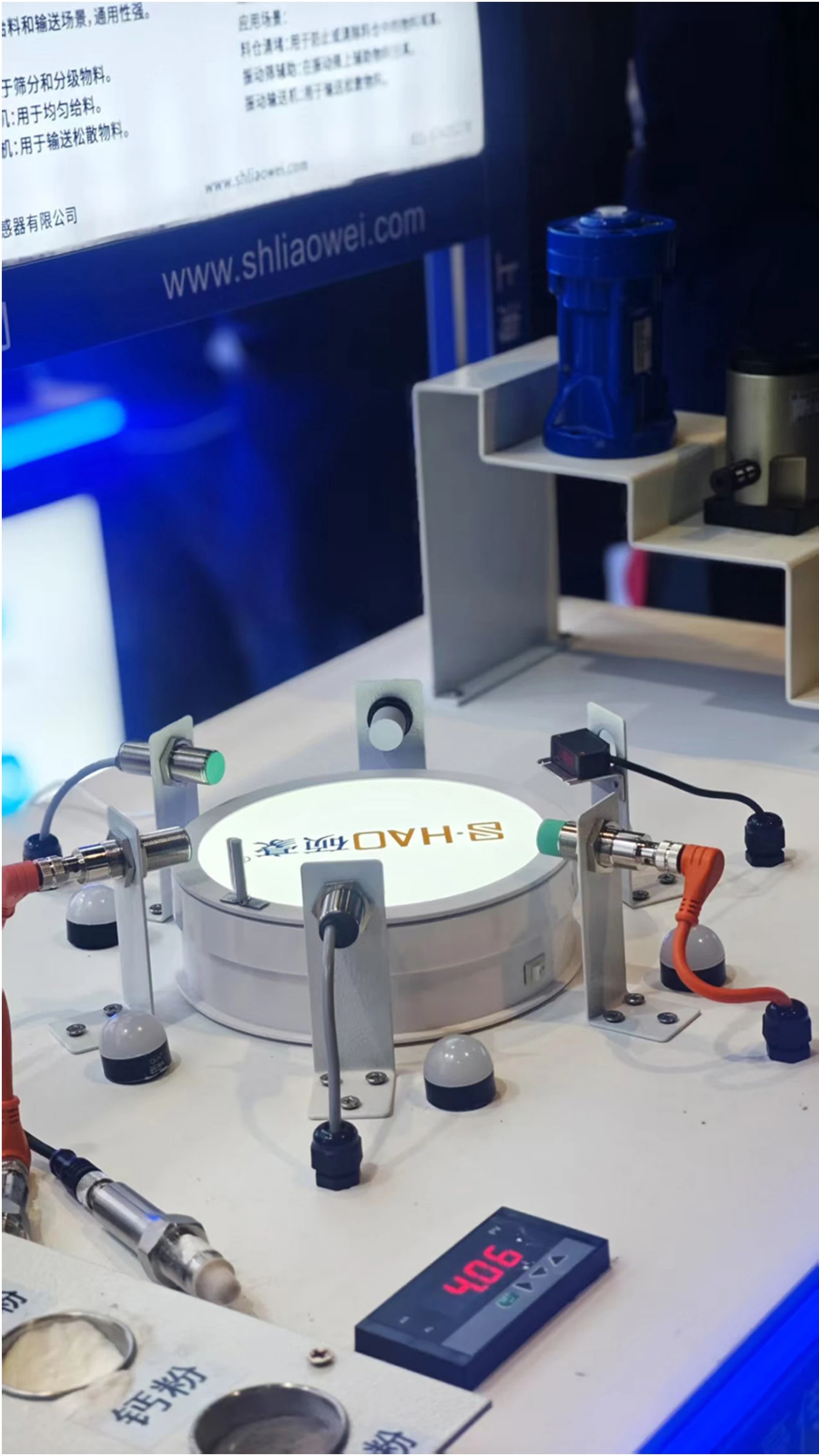
At the exhibition booth, Shuohao displayed a working demonstration system that allowed visitors to clearly observe how the photoelectric sensor functions in real time. The system included several optical sensors arranged around a detection platform, showing how light signals can detect objects from different directions.
When objects entered the sensing area, the sensors instantly detected the change in the light signal and transmitted the data to the display system. The digital interface showed real-time feedback, allowing visitors to understand the detection process visually.
This interactive demonstration effectively illustrated the precision, sensitivity, and reliability of Shuohao’s sensing technology.
Applications in Industrial Automation
Photoelectric sensors are widely used in many industries because of their flexibility and reliability. Typical applications include:
• Industrial automation equipment
• Conveyor and logistics systems
• Packaging machinery
• Material handling systems
• Production line detection
• Position detection and object counting
In automated production environments, photoelectric sensors play an essential role in ensuring that machines operate efficiently and accurately. They can detect products on conveyor belts, monitor object positions, or trigger automated processes when certain conditions are met.
Shuohao’s Commitment to Sensor Technology
As a professional manufacturer in the sensing technology industry, Shuohao (·HAO) continues to invest in research, development, and manufacturing capabilities to improve the performance and reliability of its sensing products.
By combining advanced manufacturing equipment, precision engineering, and strict quality control, Shuohao is able to provide dependable sensing solutions for industrial customers worldwide.
The exhibition demonstration of the photoelectric sensor not only showcased the company’s technological capability but also highlighted its commitment to supporting the development of modern industrial automation.
With the continuous growth of intelligent manufacturing and Industry 4.0, non-contact sensing technologies such as photoelectric sensors will play an increasingly important role in improving productivity, efficiency, and operational safety across many industries.