
How Dusty Powder Affects Silo Level Switch Performance And What Buyers Can Do
Dusty powder can seriously impact level switch performance in silos, leading to false alarms, unstable signals and unexpected downtime. Buyers need to understand the risks, choose the right sensor type, and follow best installation and maintenance practices to ensure reliable operation in dusty environments.
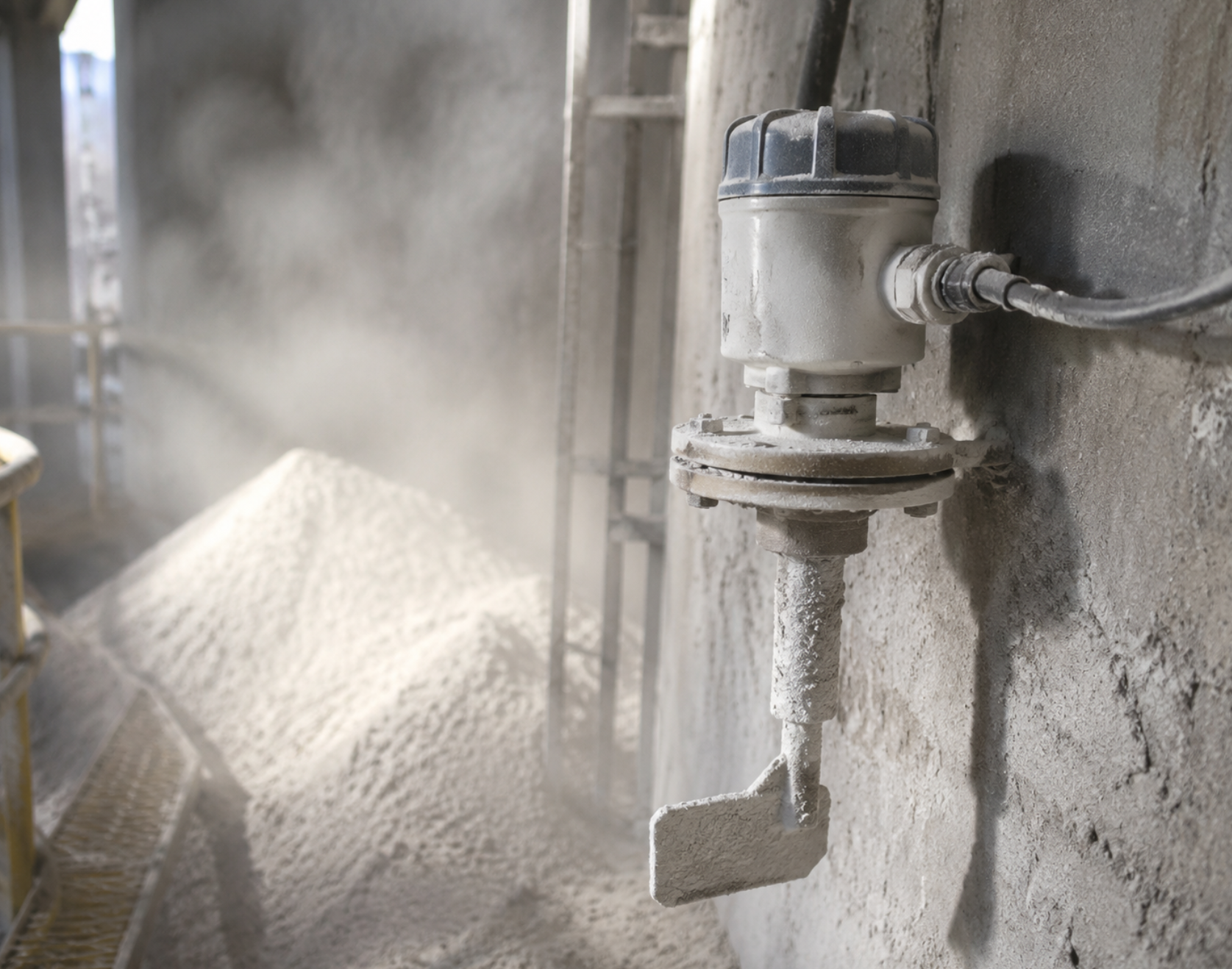
Get QuoteIn cement, flour, chemical powder, and feed silos, heavy dust can coat sensors, interfere with mechanical parts, and affect signal accuracy. Dust accumulation may also cause short-term false readings, which can stop production lines unnecessarily or trigger alarms. The challenge increases with fine, low-density, sticky, or humid powders, which can adhere to probes, paddles, or forks and reduce measurement reliability. Different technologies respond differently to dusty powders: Rotary Paddle: economical and widely used; may wear faster in abrasive dust and experience coating issues. Vibrating Fork: compact and requires less mechanical movement; may accumulate powder on forks. RF Admittance: less affected by sticky dust or buildup; ideal for dusty or coating-prone powders. Capacitance: suitable for general powders; performance may degrade with heavy coating or dust layering. Many false signals arise from incorrect mounting locations. Common mistakes include installing directly under the filling pipe, too close to the discharge outlet, or in areas prone to material bridging or powder accumulation. Best practices: Mount sensors near maximum safe level but away from the filling stream. Avoid wall areas with frequent powder buildup. Use protective baffles if material impact cannot be avoided. Confirm probe, fork, or paddle length according to silo height and powder behavior. Even with the correct sensor type and installation, dusty powder can accumulate over time. Regular inspection and cleaning help maintain stable signals. Inspect sensors weekly in high-dust environments. Clean probe, fork, or paddle surfaces from powder buildup. Check cable entry and housing seals for dust intrusion. Test signal output to ensure proper control system response. Ensure the level switch output is compatible with PLC or alarm system. For dusty environments, adding short signal delays or filtering logic can reduce false triggers. Check voltage and output type (relay, PNP, NPN). Integrate with alarm light, buzzer, or automatic stop system. Consider dust-proof housing and protective conduit for wiring. Dusty powder silos present a challenging environment for level switches. Buyers should select the correct sensor type, install it properly, maintain it regularly, and connect it correctly to the control system to minimize false alarms and downtime. Shao Level provides rotary paddle, vibrating fork, RF admittance, and capacitance level switches for dusty powder silos, hoppers, and industrial bulk material handling systems. Send us your silo material type, installation details, and control requirements. Shao Level can help recommend the most suitable level switch solution.Why Dusty Powder Is A Challenge
1. Select The Right Level Switch Type
2. Correct Installation Position
3. Regular Maintenance And Cleaning
4. Connect Properly To Control System
Final Recommendation
Need Reliable Level Switches For Dusty Powder Silos?