
How To Choose A Vibrating Fork Level Switch For Solids And Liquids
A vibrating fork level switch is widely used for point level detection in powders, granules and liquids. To choose the right model, buyers should confirm the material type, density, viscosity, installation position, temperature, pressure and process environment.
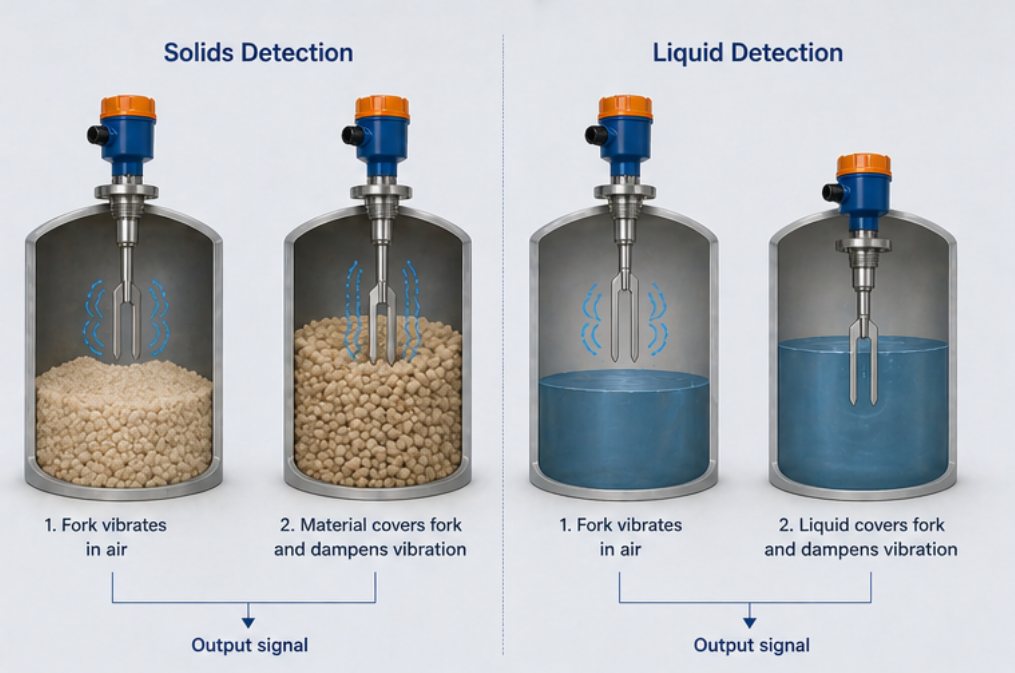
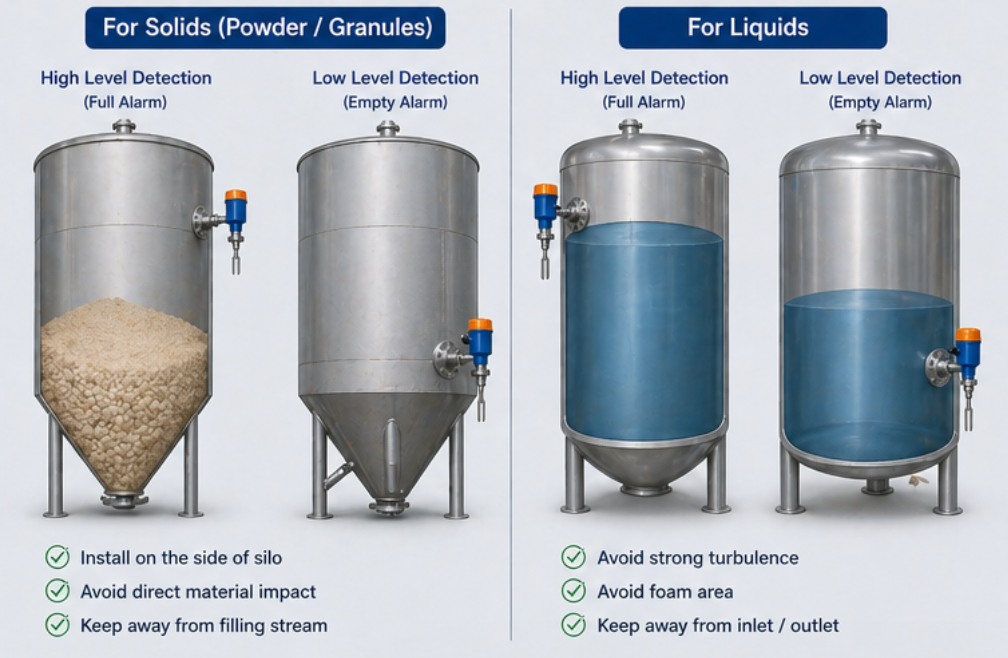
Get QuoteA vibrating fork level switch uses a fork-shaped probe that vibrates at a specific frequency. When solid material or liquid covers the fork, the vibration frequency changes. The device detects this change and outputs a switching signal to the control system. Because it has no rotating paddle, it is suitable for many applications where compact structure, low mechanical wear and stable point level detection are required. The first step is to confirm the measured medium. For solids, the most important factors are bulk density, particle size, dust and material flowability. For liquids, buyers should focus on viscosity, foam, turbulence, corrosion and pressure. For powders and granules: cement powder, flour, feed, plastic pellets, fly ash and chemical powder. For liquids: water, oil, chemical liquids, wastewater and process fluids. For special media: sticky, corrosive, high-temperature or low-density materials need special confirmation. For bulk solids, low-density powder may not produce enough resistance to change the vibration signal. In this case, buyers should choose a model suitable for light bulk solids. For liquids, high viscosity or sticky fluids may coat the fork and affect detection. If the material has strong buildup, a vibrating fork switch may not always be the best choice. In some difficult applications, RF admittance level switches or other level measurement solutions may be more suitable. Vibrating fork level switches can be installed from the side or top depending on the tank or silo structure. For high-level alarm, the switch should be installed near the upper control point. For low-level alarm, it should be installed near the discharge or lower process limit. In powder silos, avoid placing the fork directly under the material inlet. Falling material may cause mechanical impact and false triggering. In liquid tanks, avoid positions with strong turbulence, heavy foam or direct pump suction if stable detection is required. Buyers often compare vibrating fork level switches with rotary paddle, capacitance and RF admittance level switches. Each type has a different advantage. Confirm whether the medium is powder, granule or liquid. Check bulk density, viscosity, particle size and buildup risk. Confirm side mounting or top mounting requirement. Avoid direct material impact or strong liquid turbulence. Confirm temperature, pressure, corrosion and explosion-proof requirements. Match power supply, output signal and process connection. To recommend the right vibrating fork level switch, the manufacturer needs to understand the actual working condition. Buyers should provide the material name, density or viscosity, tank or silo size, installation position, working temperature, pressure, process connection, power supply and output signal. For OEM equipment manufacturers and project buyers, drawings or application photos can help reduce model selection errors and make the quotation more accurate. A vibrating fork level switch is a practical choice for many solid and liquid level detection applications. It is especially useful when buyers need compact design, no rotating parts and stable point level switching. However, for very sticky, coating or heavy buildup applications, buyers should compare vibrating fork with RF admittance or other level switch technologies before making a final decision. Share your material type, tank or silo structure and working conditions. Shao Level can help recommend a suitable vibrating fork level switch for solids and liquids.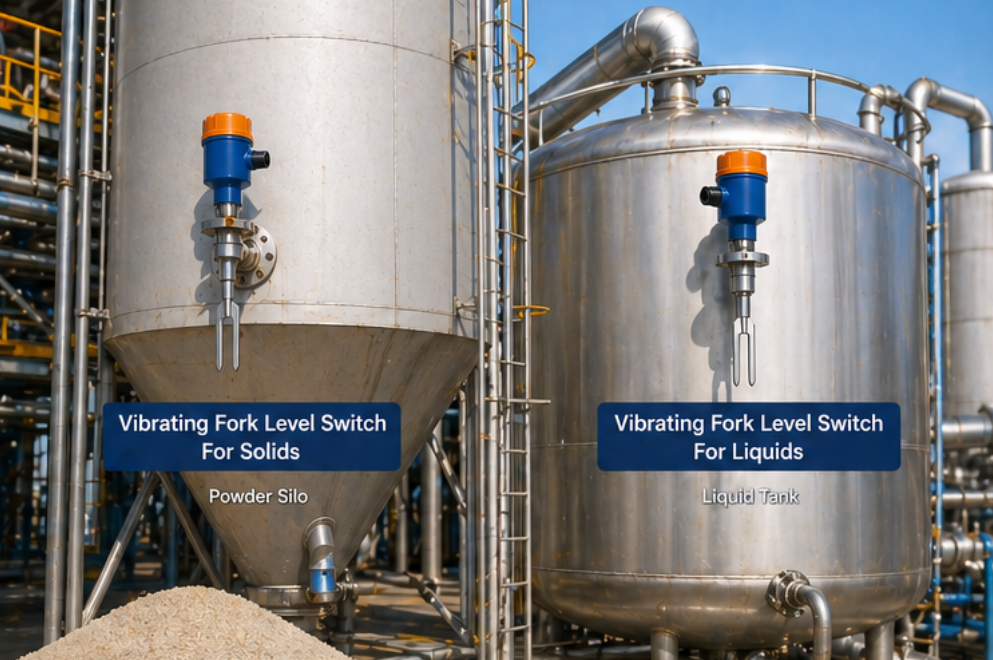
What Is A Vibrating Fork Level Switch?
1. Confirm Whether The Medium Is Solid Or Liquid
2. Check Density, Viscosity And Flow Conditions
3. Select The Right Installation Position
4. Compare Vibrating Fork With Other Level Switches
Type Suitable Media Main Advantage Vibrating Fork Level Switch Powder, granules, liquids No rotating parts, compact, stable signal Rotary Paddle Level Switch Dry powder and bulk solids Economical for powder silos Capacitance Level Switch Liquids, powders, granules Flexible for general media RF Admittance Level Switch Sticky, dusty, buildup-prone media Better anti-buildup performance Quick Selection Checklist
What Buyers Should Provide Before Quotation
Final Recommendation
Need Help Choosing A Vibrating Fork Level Switch?