
OEM Equipment Level Switch Selection: How To Ensure Accurate Feeding Control
Accurate feeding control in OEM powder handling equipment depends on selecting the right level switch. This guide covers how to match sensors to hoppers, silos, conveyors, and mixers to avoid false alarms, material overflow, and production downtime.
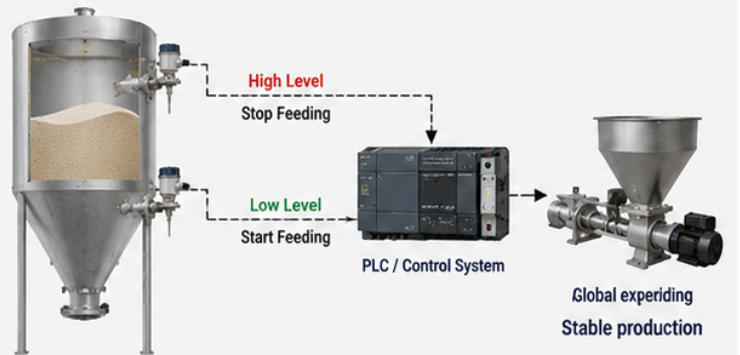
Get QuoteIn OEM systems, improper level switch selection can lead to overfeeding, underfeeding, or false alarms. Matching the sensor to the material, flow characteristics, and installation location ensures smooth operation and reduces maintenance frequency. Define the material type, flow characteristics, and equipment configuration: Powder type: cement, flour, plastic granules, chemical powders Material properties: free-flowing, sticky, dusty, humid Equipment type: hopper, silo, feeder, mixer, conveyor Detection purpose: high-level alarm, low-level alarm, feeding control OEM powder handling equipment often requires custom solutions. Sensor selection depends on material and environment: Rotary Paddle: cost-effective, suitable for dry, free-flowing powders Vibrating Fork: compact, suitable for small hoppers and granules RF Admittance: ideal for sticky or dusty powders prone to buildup Capacitance: suitable for general powders and liquids Installation position and mounting type affect signal accuracy: High-level alarms: near max safe level, away from filling stream Low-level alarms: above discharge points, away from turbulence Ensure paddles or forks can move freely Use baffles for direct material impact Level switches must interface correctly with PLCs or control systems to maintain precise feeding: Verify output signal type (relay, PNP/NPN) Use short signal delay if needed for dust or vibration Ensure alarms and automatic stops are linked Test system response under real material conditions Share your powder type, equipment layout, and control requirements. Shao Level can recommend a custom level switch solution to ensure reliable feeding and reduce downtime.Why Level Switch Selection Is Critical
1. Understand Your Material and Equipment
2. Choose The Right Sensor Technology
3. Confirm Installation And Mounting
4. Integration With Control Systems
Need Accurate Feeding Control For OEM Powder Equipment?