
Common Level Switch Problems And How To Avoid False Signals
False signals are one of the most common problems in industrial level measurement. Wrong level switch selection, poor installation position, material buildup, dust, vibration and unstable wiring can all affect level detection accuracy.
Get Quote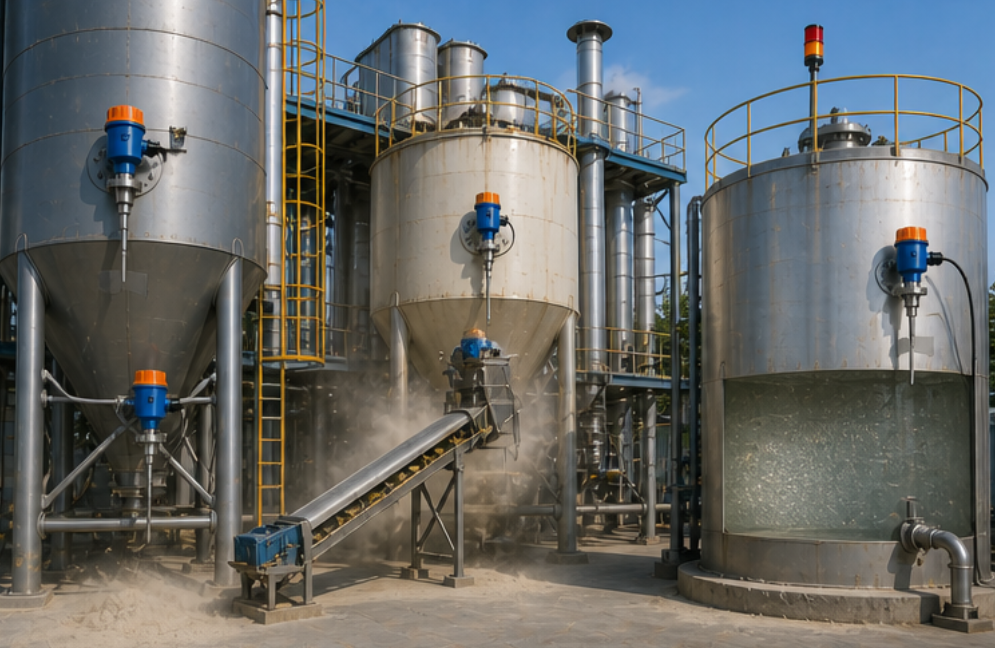
Why False Signals Happen In Level Measurement
Industrial tanks, silos and hoppers often work in difficult conditions. Powders create dust and buildup. Liquids may foam or generate turbulence. Bulk solids may bridge, compact or impact the sensor during filling.
A level switch should detect actual material level, not temporary process disturbance. When the sensor cannot distinguish between the two, false high-level alarms, false low-level alarms or unstable signals may occur.
1. Wrong Level Switch Type Selection
One of the biggest problems is choosing the wrong sensor technology for the material. A level switch suitable for dry plastic granules may not work well for sticky flour or dusty cement powder.
| Material Condition | Possible Problem | Recommended Solution |
|---|---|---|
| Sticky or coating powder | False high-level signal from buildup | RF admittance level switch |
| Low-density powder | Sensor not triggered reliably | Larger paddle or higher sensitivity model |
| Strongly turbulent liquid | Signal fluctuation | Avoid turbulent installation area |
| Heavy dust environment | Dust interference and unstable detection | Better sealing and suitable signal delay |
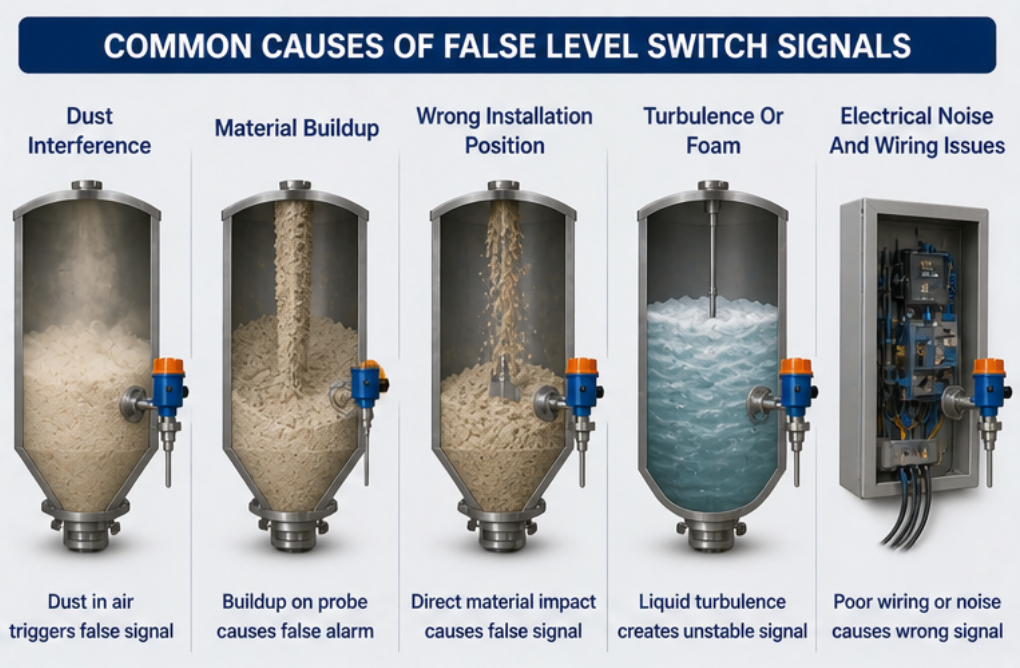
2. Incorrect Installation Position
Even a high-quality level switch can fail if it is installed in the wrong location. In powder silos, sensors installed directly under the filling pipe may receive strong material impact and trigger false alarms.
In liquid tanks, sensors placed near pump suction areas or heavy turbulence zones may create unstable signals. The installation point should represent the actual control level, not temporary material movement.
3. Material Buildup On Sensor Surface
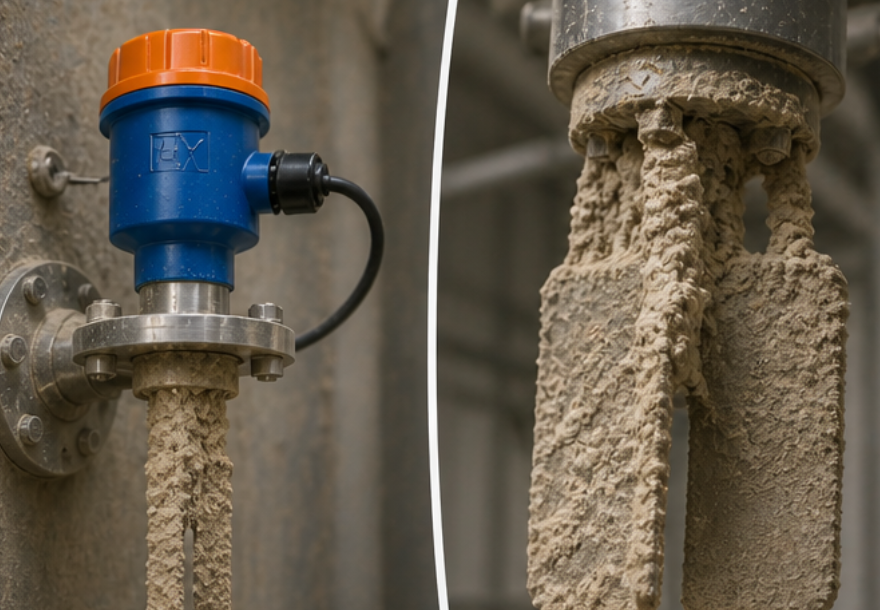
Sticky powder, humid flour, sludge or coating materials may accumulate on the probe, paddle or fork. When buildup becomes thick enough, the level switch may detect the buildup itself as real material.
For buildup-prone applications, RF admittance level switches are often more reliable because they are designed to reduce the influence of coating on the probe. Regular inspection and cleaning may also be necessary in difficult environments.
4. Wiring And Power Supply Problems
Unstable power supply, poor grounding, incorrect wiring or electrical noise can also create false signals. In industrial environments with motors, conveyors and large equipment, electrical interference may affect the control signal.
Buyers should confirm power supply type, relay output, cable entry, shielding and grounding requirements before installation. Explosion proof or outdoor applications may require additional protection.
5. Wrong Delay Setting Or Control Logic
During silo filling or discharge, material may temporarily touch or leave the sensor. If the control system reacts immediately, short signal changes may become false alarms.
Proper signal delay can help improve stability. For example, the control system may require the sensor to remain triggered for several seconds before confirming the alarm signal.
How To Reduce False Signals
Choose the correct level switch for the material condition.
Avoid installing sensors directly in filling impact zones.
Check buildup, dust and material flow behavior.
Use proper grounding and stable electrical wiring.
Confirm signal delay and control logic settings.
Inspect and clean sensors regularly in sticky applications.
Use explosion proof models in hazardous dust areas if required.
What Buyers Should Provide Before Troubleshooting
If false signals already occur, buyers should provide material name, level switch model, installation photos, silo or tank structure, wiring method, power supply, output signal and details about when the false alarm happens.
Photos of the sensor surface, buildup condition and installation position can help identify the root cause more quickly.
Final Recommendation
Most level switch problems are not caused by the sensor itself, but by wrong selection, poor installation or misunderstanding of the material condition. A correct level switch combined with proper installation and control settings can greatly reduce false alarms.
Shao Level provides rotary paddle level switches, vibrating fork level switches, RF admittance level switches, capacitance level switches and other industrial level measurement products for tanks, silos and automation systems.
Need Help Solving False Level Switch Signals?
Send us your material type, tank or silo structure, installation photos and alarm problem details. Shao Level can help recommend a more reliable level switch solution.
Contact Us / Get Quote