
How To Choose A Level Switch For Food Powder Processing
Food powder processing requires stable level detection, hygienic design and reliable performance in dusty production environments. Choosing the right level switch can help prevent overflow, empty running, material blockage and production interruption.
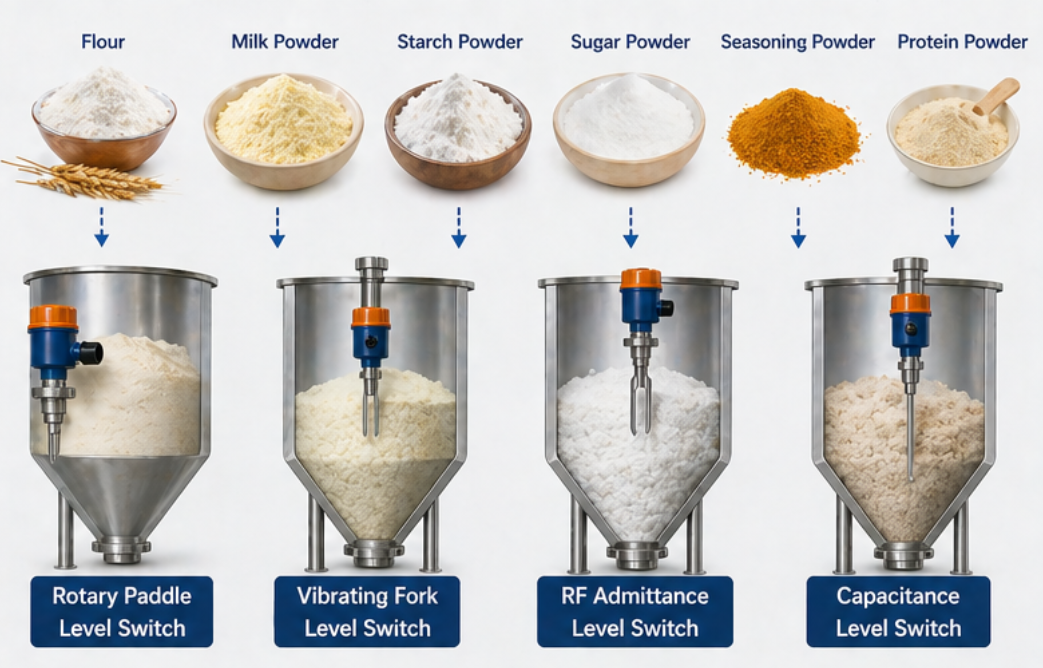
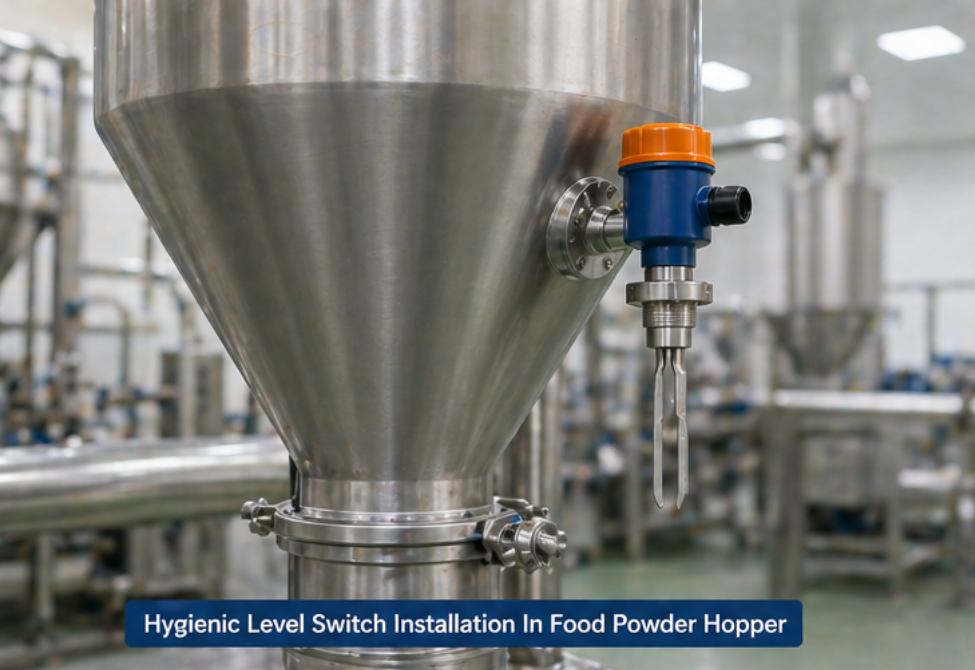
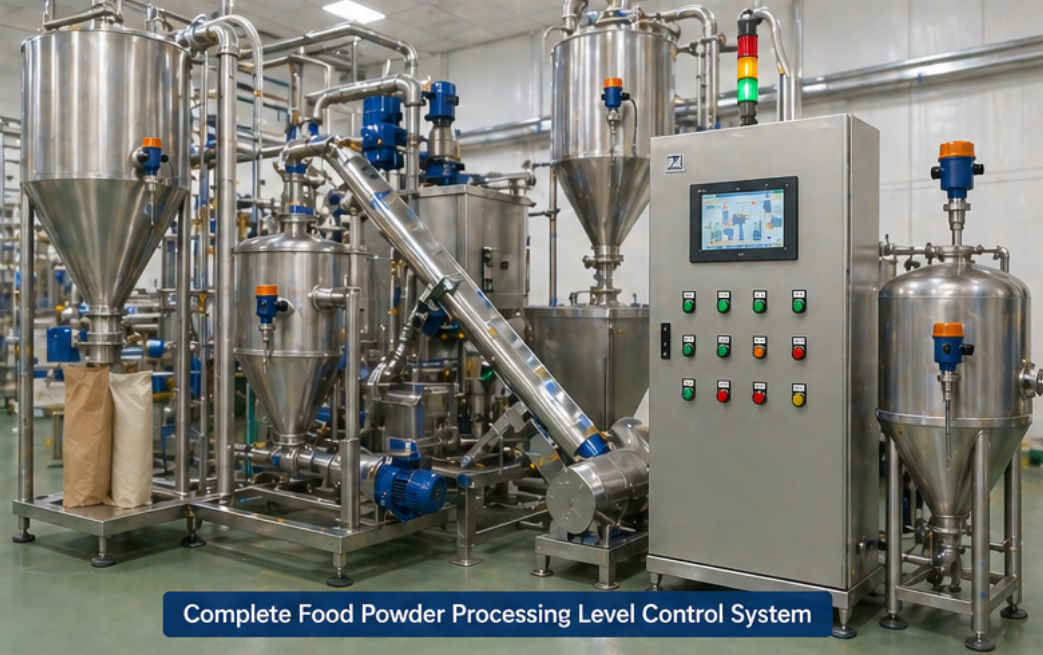
Get QuoteFood powders such as flour, milk powder, starch, sugar powder, seasoning powder, protein powder and grain powder often create dust, buildup and uneven material flow inside silos or hoppers. Some materials are light and fluffy, while others are sticky or easy to compact. In food processing plants, a level switch is used for high-level alarm, low-level alarm, material presence detection and process interlock. Besides detection accuracy, buyers should also consider hygiene, material contact parts, cleaning convenience and long-term stability. The first step is to understand the powder behavior. Different food powders require different sensor structures and installation methods. Bulk density: Light powders may require more sensitive detection. Flowability: Poor-flowing powder may form bridging or cavities. Dust level: Fine powder dust may affect sealing and signal stability. Moisture: Humid powder may stick to probes or paddles. Cleaning requirement: Food production may require easy-to-clean contact parts. For food powder processing, the right sensor depends on powder density, dust, buildup risk and installation space. Buyers should not choose by price only. Food processing equipment should be easy to clean and suitable for contact with food-related materials. Buyers should confirm the material of the probe, paddle, fork, housing and process connection. Stainless steel contact parts are commonly preferred in food powder applications. Smooth surfaces and simple structures can help reduce powder residue and make maintenance easier. Installation position is critical for stable level detection. For high-level alarm, the switch should be installed near the upper control point to prevent overflow. For low-level alarm, it should be installed near the discharge area to prevent empty running or material shortage. In food powder hoppers, avoid installing the sensor directly under the filling pipe or in the strongest material impact area. For powders with poor flowability, buyers should also consider bridging and dead zones inside the hopper. Confirm powder type, density, particle size and moisture. Check whether the powder is sticky, dusty or easy to bridge. Choose stainless steel contact parts when needed. Confirm high-level alarm, low-level alarm or material presence detection. Avoid direct filling impact and unstable flow areas. Match power supply, output signal and process connection. To recommend the right level switch, buyers should provide the food powder name, bulk density, humidity, hopper or silo size, installation position, cleaning requirement, working temperature, process connection, power supply and output signal. For food processing equipment manufacturers and production line integrators, drawings or application photos can help improve model selection accuracy and reduce procurement risk. For dry and free-flowing food powders, rotary paddle level switches are a practical and economical choice. For compact hoppers or low-wear applications, vibrating fork level switches can be considered. For sticky or coating powders, RF admittance level switches may provide better stability. Shao Level provides level switches and industrial level measurement products for powder silos, food processing hoppers and automation systems. A correct selection can help improve production safety, reduce downtime and support stable material control. Send us your food powder type, hopper size, installation position and working conditions. Shao Level can help recommend a suitable level switch solution.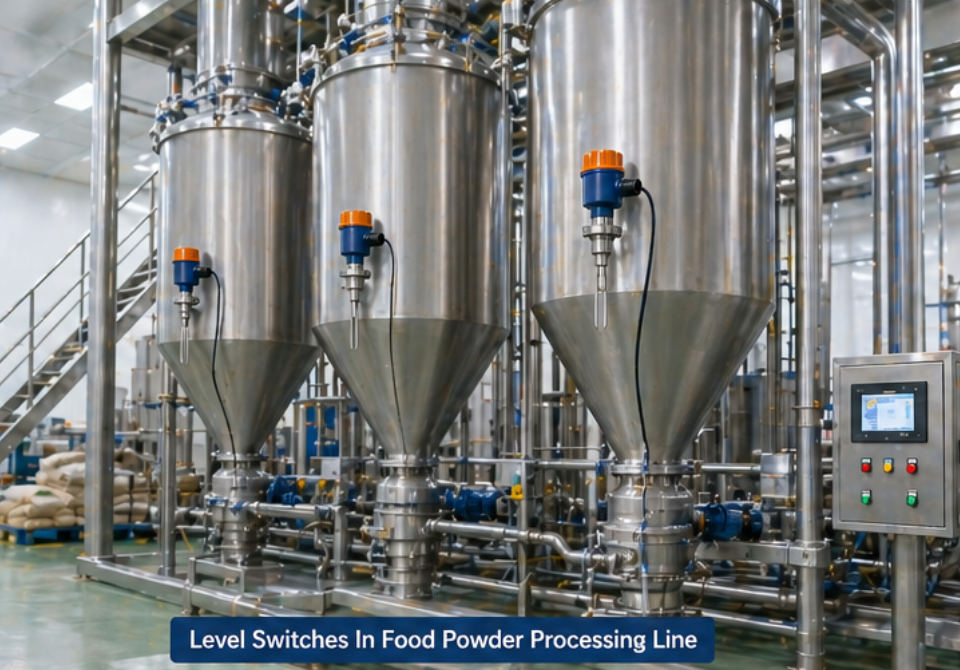
Why Food Powder Level Detection Is Different
1. Confirm The Food Powder Characteristics
2. Choose The Right Level Switch Type
Level Switch Type Suitable Food Powder Application Main Advantage Rotary Paddle Level Switch Flour, grain powder, sugar powder, feed powder Economical and easy to use for dry powders Vibrating Fork Level Switch Powder hoppers, compact bins, granules No rotating paddle and compact design RF Admittance Level Switch Sticky or coating food powders Better resistance to buildup and false signals Capacitance Level Switch General powder or liquid food materials Flexible for different media 3. Pay Attention To Hygiene And Contact Materials
4. Select The Correct Installation Position
Food Powder Level Switch Checklist
What Buyers Should Provide Before Quotation
Final Recommendation
Need Help Choosing A Level Switch For Food Powder Processing?