
How To Select A Level Sensor For Cement Silos
Cement silos are dusty, abrasive and sometimes affected by material buildup, vibration and outdoor conditions. Selecting the right level sensor can help prevent overflow, empty running, false alarms and production interruptions.
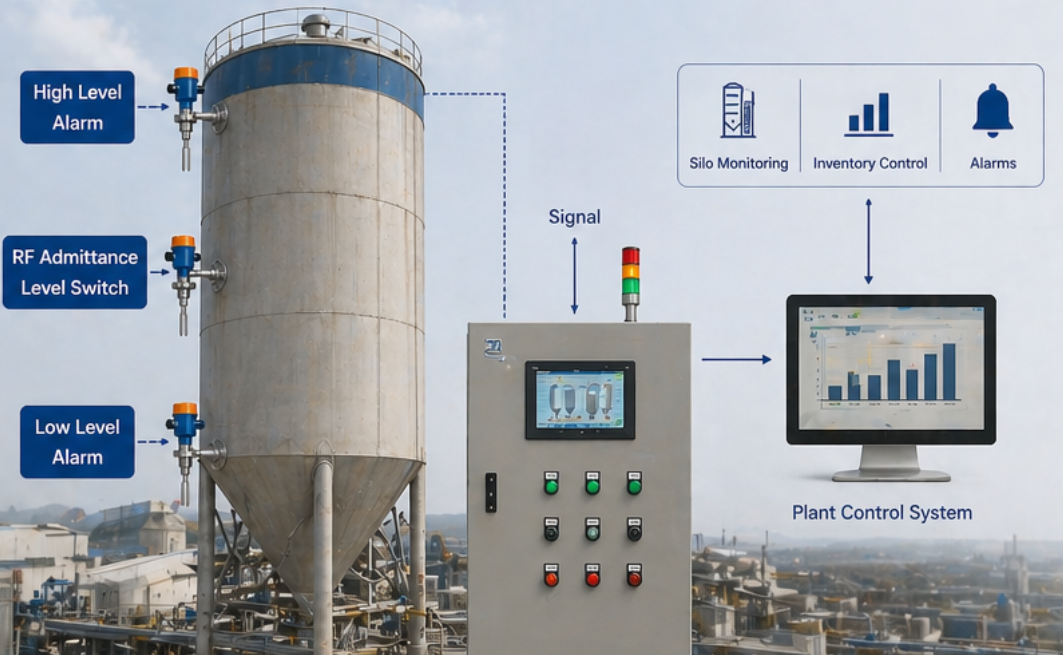
Get QuoteCement powder is a typical difficult material for level detection. It is fine, dusty, abrasive and may form buildup on the sensor surface. During pneumatic conveying or silo filling, cement powder can create dust clouds, uneven material surfaces and strong material impact. If the wrong level sensor is selected, the system may give false high-level alarms, fail to detect low level, or require frequent cleaning. For batching plants, cement terminals and concrete production lines, stable silo level control is essential for production safety and material management. Before choosing a level sensor, buyers should confirm whether the system needs point level detection or continuous level measurement. Cement powder is dry but dusty and abrasive. Different sensor technologies have different advantages in cement silo applications. Heavy dust is one of the biggest problems in cement silo level detection. During filling, dust may cover the probe, enter weak sealing structures or affect signal stability. Cement powder may also stick to the sensor surface when humidity is present. For simple high-level and low-level alarms, rotary paddle or vibrating fork switches can be practical. For applications where buildup or false alarms often occur, RF admittance level switches may provide better reliability. For high-level detection, the sensor should be installed near the upper part of the silo but away from direct material impact during filling. For low-level detection, it should be installed near the discharge area but not too close to the outlet where material flow may be unstable. If the sensor is installed directly under the filling pipe, falling cement powder may cause impact damage or false signals. In some cement silos, a protective baffle can help reduce mechanical impact. Confirm high-level alarm, low-level alarm or continuous measurement. Check cement powder density, dust level and humidity. Avoid direct installation under filling pipe or impact area. Confirm side mounting, top mounting, thread or flange connection. Check power supply, output signal and control cabinet compatibility. Consider sealing, vibration resistance and outdoor protection. To recommend a suitable level sensor for cement silos, buyers should provide silo height and diameter, installation position, cement powder condition, high-level or low-level purpose, power supply, output signal, process connection and environmental requirements. For cement plants, concrete batching plants and silo system manufacturers, installation drawings or silo photos can help avoid wrong model selection and reduce procurement risk. For basic cement silo alarms, rotary paddle level switches are economical and widely used. For compact installation, vibrating fork switches are also practical. For dusty or buildup-prone cement applications, RF admittance level switches can help reduce false signals. For inventory monitoring, radar level sensors may be considered. The best selection depends on the detection purpose, silo design and working environment. Buyers should not select only by price, but by long-term reliability and compatibility with the production system. Share your cement silo size, installation position and detection purpose. Shao Level can help recommend a suitable level sensor or level switch solution for your project.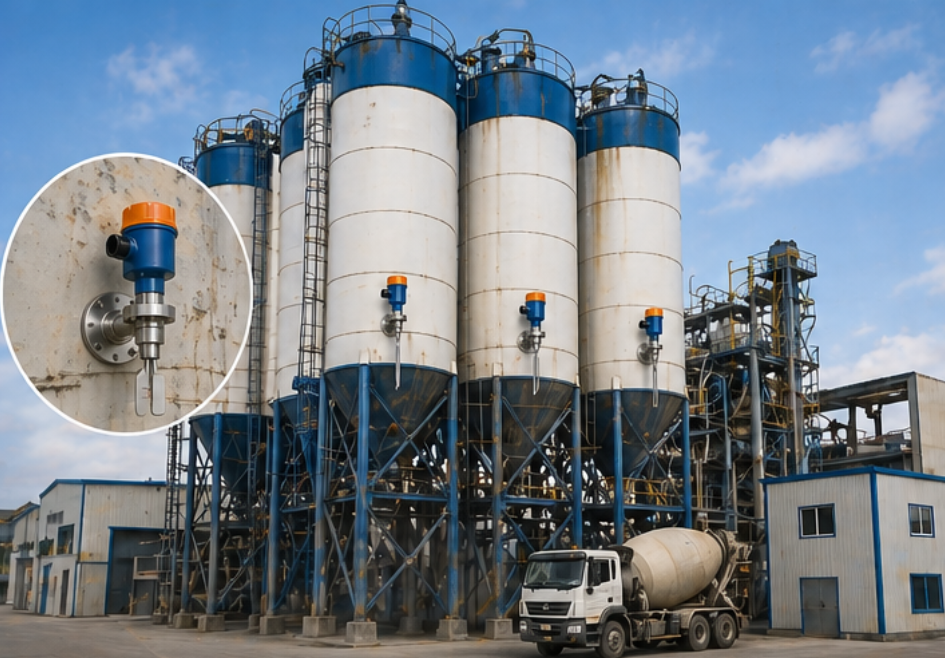
Why Cement Silo Level Measurement Is Challenging
1. Define The Detection Purpose First
Purpose Recommended Type Typical Use High-Level Alarm Rotary paddle / vibrating fork / RF admittance Prevent cement overflow Low-Level Alarm Rotary paddle / vibrating fork Avoid empty running and feeding interruption Continuous Level Monitoring Radar / ultrasonic level sensor Monitor cement inventory 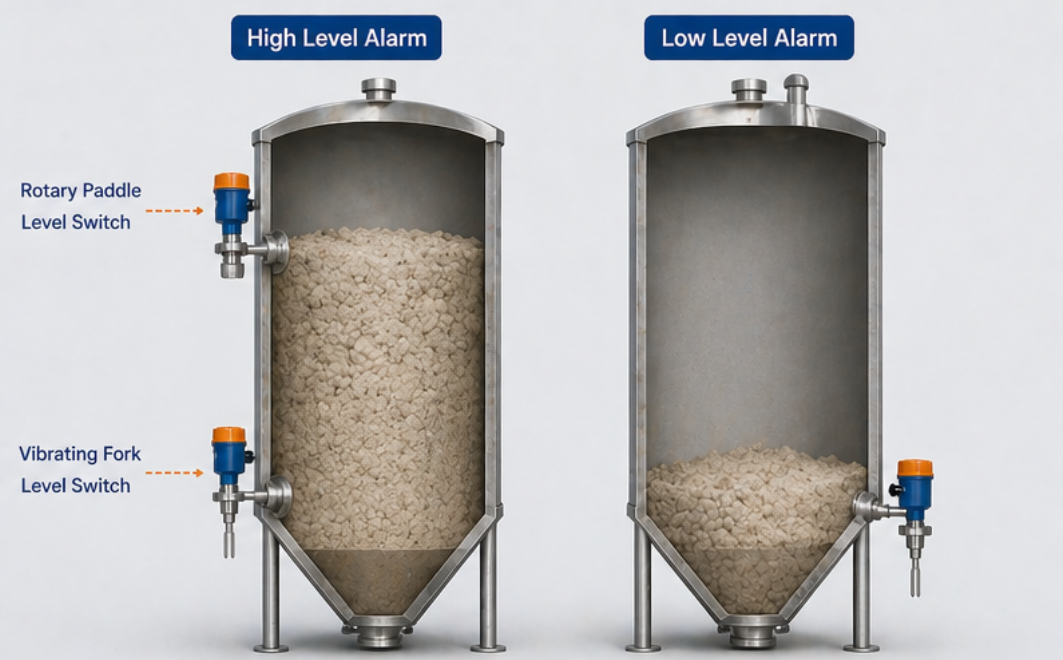
2. Choose The Right Sensor Type For Cement Powder
Sensor Type Best Use Selection Note Rotary Paddle Level Switch Basic high/low level alarm Economical and widely used for cement silos Vibrating Fork Level Switch Compact point level detection No rotating paddle, suitable for many powder applications RF Admittance Level Switch Dusty or buildup-prone conditions Better resistance to coating and false signals Radar Level Sensor Continuous inventory monitoring Useful when operators need real-time level percentage 3. Pay Attention To Dust And Material Buildup
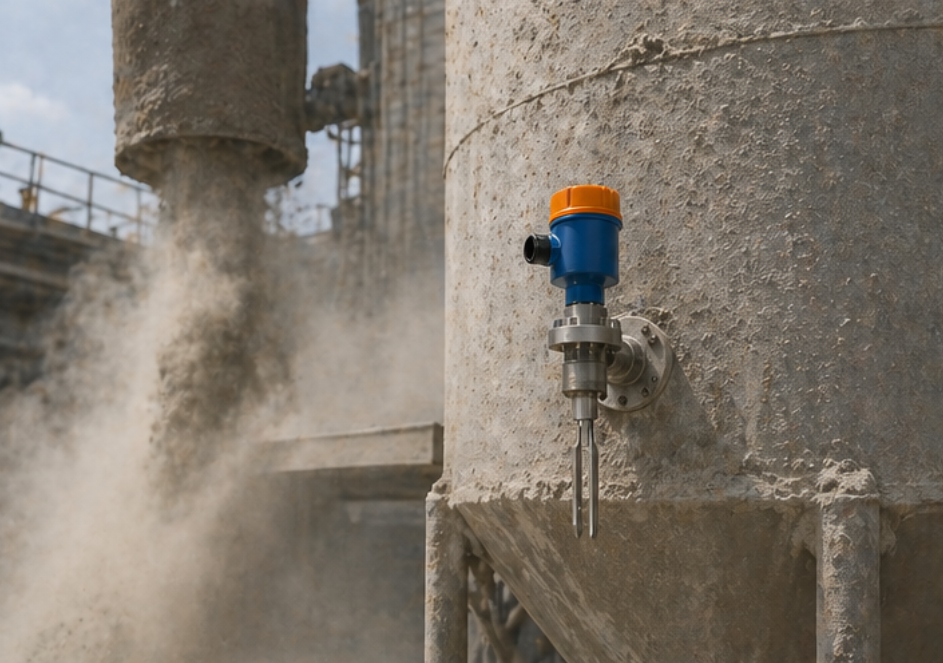
4. Select The Correct Installation Position
Cement Silo Level Sensor Checklist
What Buyers Should Provide Before Quotation
Final Recommendation
Need Help Selecting A Level Sensor For Cement Silos?