
How To Choose A Level Switch For Powder, Granules And Bulk Solids
Choosing the right level switch for powder, granules and bulk solids is not only about detecting material presence. Buyers must consider material density, flowability, dust, buildup, temperature, silo structure, installation position and signal stability.
Get Quote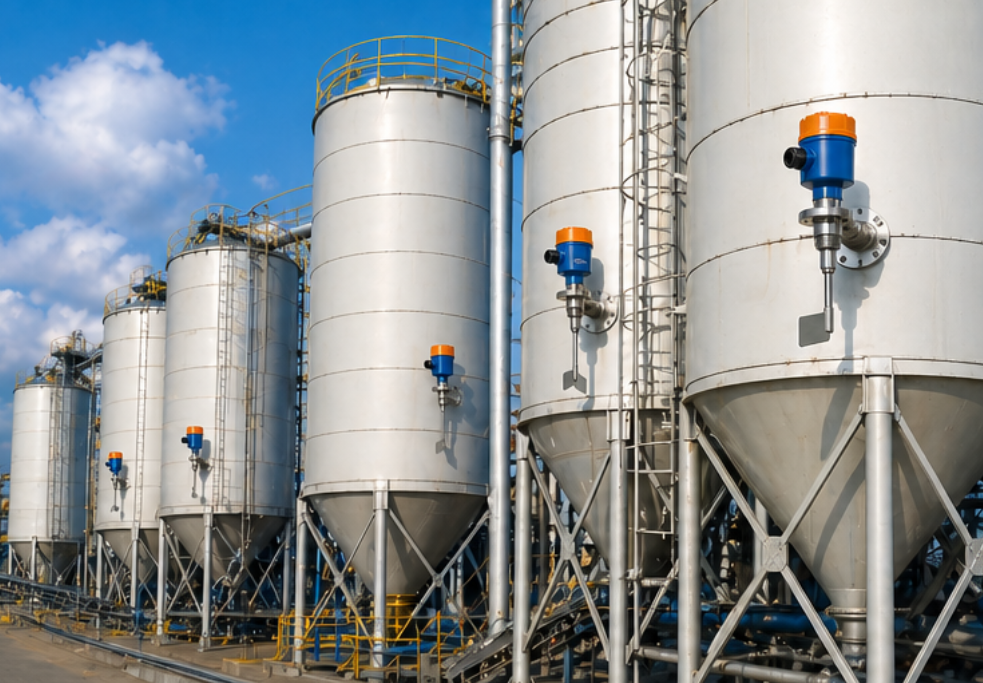
Why Bulk Solid Level Detection Is Different From Liquid Level Detection
Powder and bulk solids behave very differently from liquids. Liquids usually have a stable surface, while powders and granules may form slopes, bridges, buildup, dust clouds or empty cavities inside silos. This makes level detection more difficult.
In powder silos, a level switch may be used for high-level alarm, low-level alarm, material presence detection or process protection. If the wrong model is selected, the system may suffer from false alarms, overflow, empty running, blockage or unexpected shutdown.
1. Understand The Material Characteristics
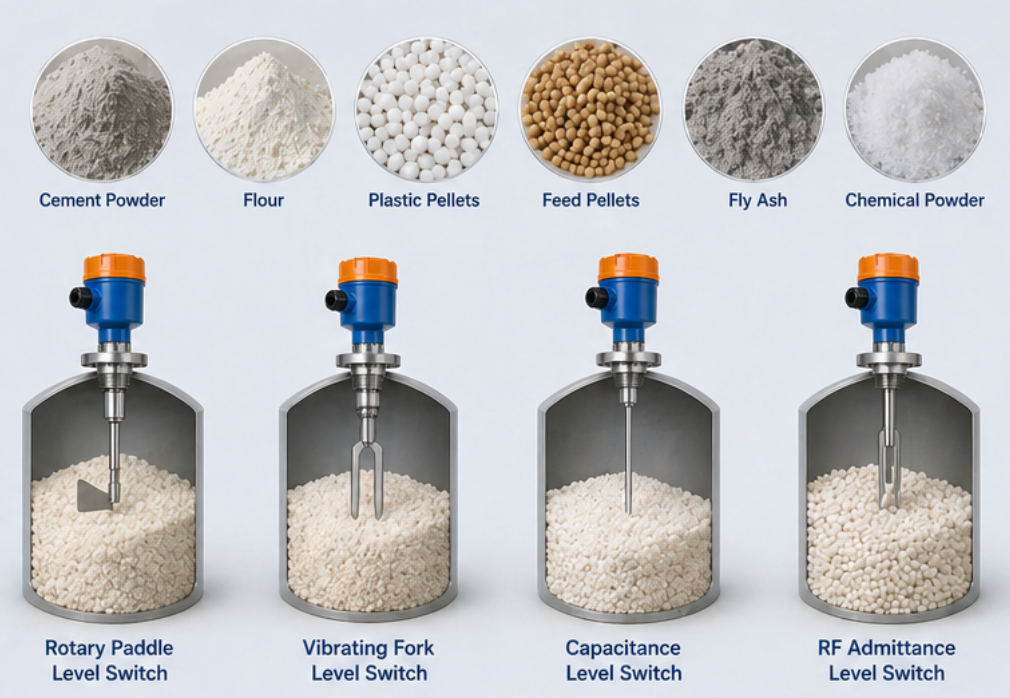
The first step is to confirm what material will be measured. Cement powder, flour, plastic pellets, feed, fly ash, lime powder, chemical powder and mineral granules all have different working conditions.
Bulk density: Light materials require higher sensitivity.
Particle size: Fine powder and large granules need different probe or paddle designs.
Flowability: Poor-flowing materials may cause bridging or buildup.
Humidity: Moist powder may stick to the sensor.
Dust: Heavy dust requires reliable sealing and protection.
Temperature: High-temperature silos require special models.
2. Choose The Right Type Of Level Switch
Different level switch types are suitable for different bulk solid applications. Buyers should not choose only by price. The right sensor depends on material condition, silo structure and required reliability.
| Level Switch Type | Best For | Main Advantage |
|---|---|---|
| Rotary Paddle Level Switch | Powder, granules, dry bulk solids | Simple, economical, widely used |
| Vibrating Fork Level Switch | Powder, granules, low-density material | No rotating paddle, compact design |
| Capacitance Level Switch | Powder, liquid, granular materials | Flexible for many media |
| RF Admittance Level Switch | Dusty, sticky or buildup-prone materials | Better anti-buildup performance |
3. Match The Sensor With The Installation Position
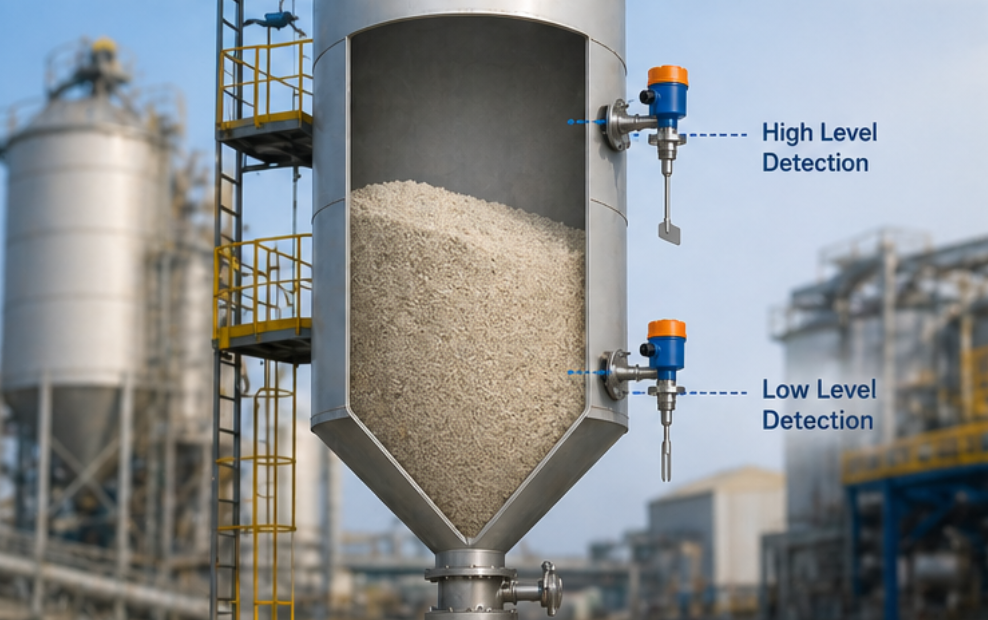
For high-level detection, the switch is usually installed near the upper side of the silo to prevent overflow. For low-level detection, it is installed near the discharge area to prevent empty running or feeding interruption.
The sensor should not be installed directly in the main material impact area. Falling material may damage the probe, paddle or fork. In heavy-impact applications, a protective baffle may be needed.
Buyers should confirm whether the installation requires threaded connection, flange connection, extended probe, side mounting or top mounting.
4. Pay Attention To Dust, Buildup And False Signals
Dust and material buildup are common problems in bulk solid level measurement. Fine powder may enter weak sealing structures. Sticky powder may coat the probe or paddle. Material bridging may cause the sensor to detect material even when the discharge area is empty.
For dusty or sticky materials, buyers should consider better sealing, suitable probe design and anti-buildup level switch technology. RF admittance level switches are often considered when buildup resistance is important.
Quick Selection Guide
For general powder silos: choose rotary paddle level switch.
For compact installation or lower mechanical wear: choose vibrating fork level switch.
For sticky or buildup-prone materials: consider RF admittance level switch.
For mixed powder and liquid applications: consider capacitance level switch.
For hazardous areas: confirm explosion-proof requirements.
5. What Buyers Should Confirm Before Ordering
To avoid wrong model selection, buyers should provide complete application information before requesting a quotation. This is especially important for OEM equipment manufacturers, silo system builders and overseas project buyers.
| Information | Reason |
|---|---|
| Material name | Determines suitable sensor type |
| Bulk density | Affects sensitivity and mechanical design |
| Temperature | Confirms whether high-temperature model is needed |
| Silo size | Helps decide installation position |
| Power supply and output | Ensures control system compatibility |
| Thread or flange size | Avoids installation mismatch |
Final Recommendation
For powder, granules and bulk solids, the best level switch is the one that matches the actual material and working condition. Rotary paddle level switches are practical for many general powder silos. Vibrating fork switches are suitable for compact and low-wear applications. RF admittance and capacitance level switches can be considered for more complex materials or special process requirements.
Shao Level provides industrial level switches and level measurement products for powder silos, hoppers, tanks and automation systems. Buyers can provide material information and installation drawings to receive a more accurate model recommendation.
Need Help Choosing A Level Switch?
Send us your material type, silo size, installation position and working conditions. We can help recommend a suitable level switch for powder, granules and bulk solids.
Contact Us / Get Quote