
Rotary Paddle Level Switch vs Vibrating Fork Level Switch: Which One Should You Choose?
Rotary paddle level switches and vibrating fork level switches are both widely used for level detection in silos, tanks, hoppers and bulk material handling systems. However, their working principles, suitable materials, installation requirements and maintenance needs are different.
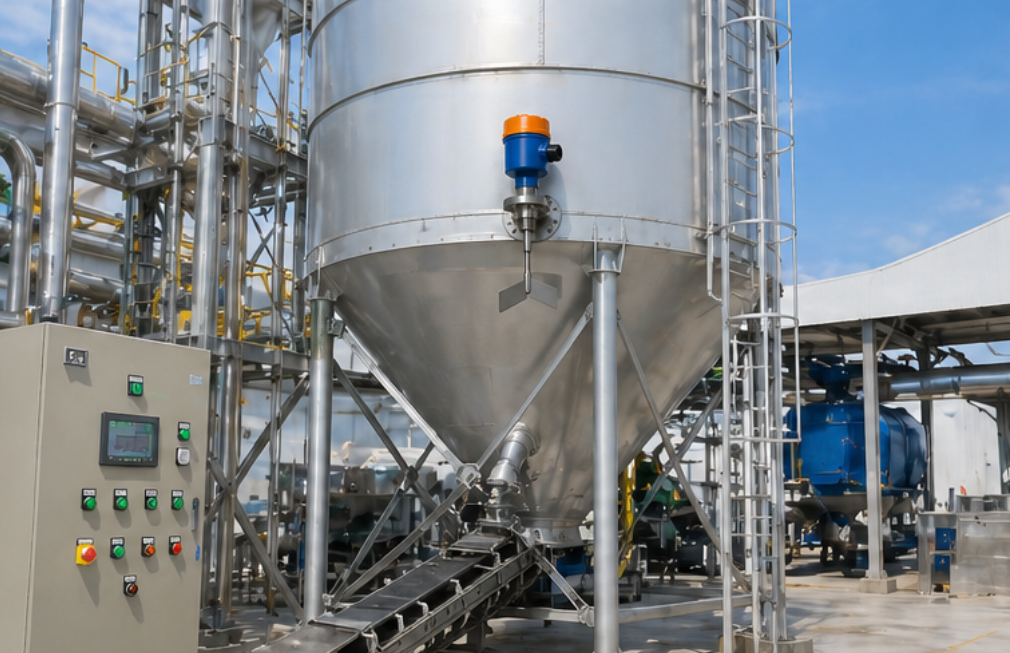
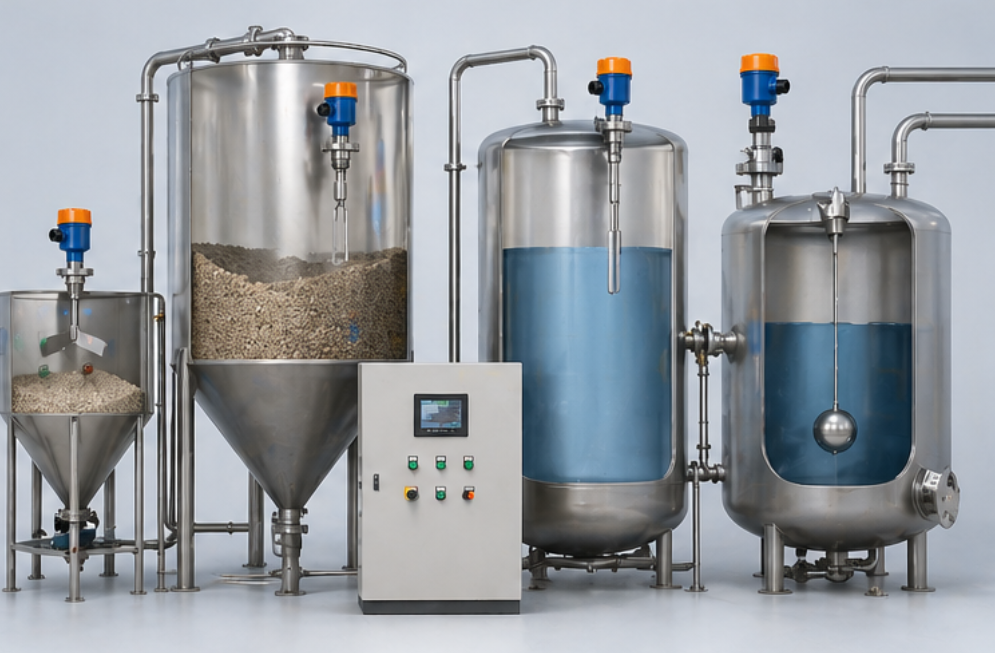
Get QuoteA rotary paddle level switch uses a small motor to rotate a paddle inside the silo or hopper. When powder, granules or bulk solids reach the paddle, the rotation is blocked. The internal mechanism then sends a level signal to the control system. This type is commonly used for dry bulk materials such as cement powder, flour, feed, plastic granules, lime powder, fly ash and chemical powder. It is simple, economical and easy to understand, making it a popular choice for high-level and low-level detection in powder silos. A vibrating fork level switch uses a fork-shaped probe that vibrates at a specific frequency. When material covers the fork, the vibration changes, and the switch outputs a level signal. It can be used for powders, granules and some liquid applications depending on the model. Compared with rotary paddle switches, vibrating fork switches have no rotating motor or mechanical paddle. They are suitable for applications where compact design, higher sensitivity or lower mechanical wear is required. A rotary paddle level switch is a good choice when the application involves dry powder or granules, the budget is controlled, and the working condition is not highly corrosive or extremely sticky. It is especially suitable for cement silos, flour storage, feed bins, plastic pellet hoppers and general powder handling systems. If the buyer needs a simple high-level alarm or low-level alarm for a powder silo, a rotary paddle switch is often a practical and cost-effective solution. A vibrating fork level switch is suitable when the application requires no rotating parts, compact structure, better sensitivity or less mechanical wear. It is often used in powder bins, granule storage, liquid tanks and automation systems where stable signal output is important. For materials with low density or applications where the installation space is limited, a vibrating fork switch may be more suitable than a rotary paddle type. However, buyers should still confirm material buildup, coating risk, vibration environment and temperature before selection. Choose rotary paddle type for economical powder silo level detection. Choose vibrating fork type when low mechanical wear is important. Choose rotary paddle type for cement, feed, flour and plastic granules. Choose vibrating fork type for compact tanks or sensitive detection. Confirm material density, temperature, dust, humidity and installation position before ordering. Before choosing between a rotary paddle level switch and a vibrating fork level switch, buyers should provide material name, bulk density, silo or tank size, installation position, working temperature, pressure condition, dust level, output signal and power supply requirement. For OEM equipment manufacturers and industrial project buyers, providing drawings or application photos can help the manufacturer recommend a more suitable model and avoid wrong selection. Shao Level provides rotary paddle level switches, vibrating fork level switches, capacitance level switches, RF admittance level switches and other industrial level measurement products for powder silos, tanks and automation systems.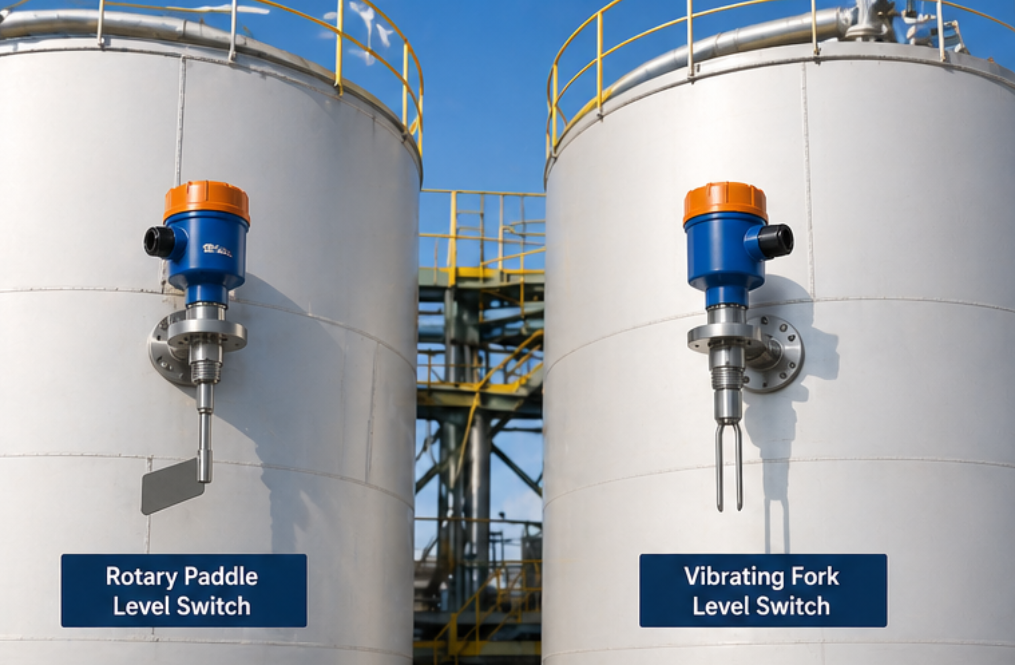
What Is A Rotary Paddle Level Switch?
What Is A Vibrating Fork Level Switch?
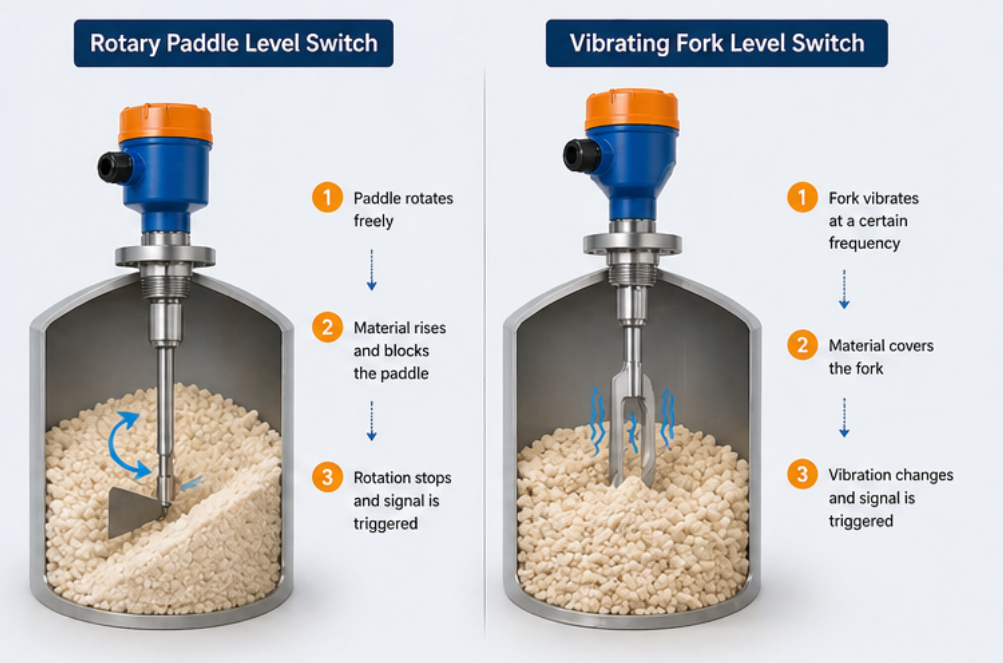
Key Differences Between The Two Level Switches
Item Rotary Paddle Level Switch Vibrating Fork Level Switch Working Principle Motor drives paddle rotation Fork vibration frequency changes Best For Powder, granules, dry bulk solids Powder, granules, some liquids Mechanical Wear Has rotating parts No rotating paddle Cost Usually more economical Usually higher cost Maintenance May need paddle cleaning or inspection Lower mechanical maintenance When Should You Choose A Rotary Paddle Level Switch?
When Should You Choose A Vibrating Fork Level Switch?
Simple Selection Recommendation
What Buyers Should Confirm Before Ordering
Need Help Choosing The Right Level Switch?