
How To Choose The Right Level Switch For Industrial Tanks And Silos
Industrial tanks and silos handle very different materials, including liquids, powders, granules, slurry and bulk solids. Choosing the right level switch can help prevent overflow, empty running, false alarms, material shortage and unexpected downtime.
Get Quote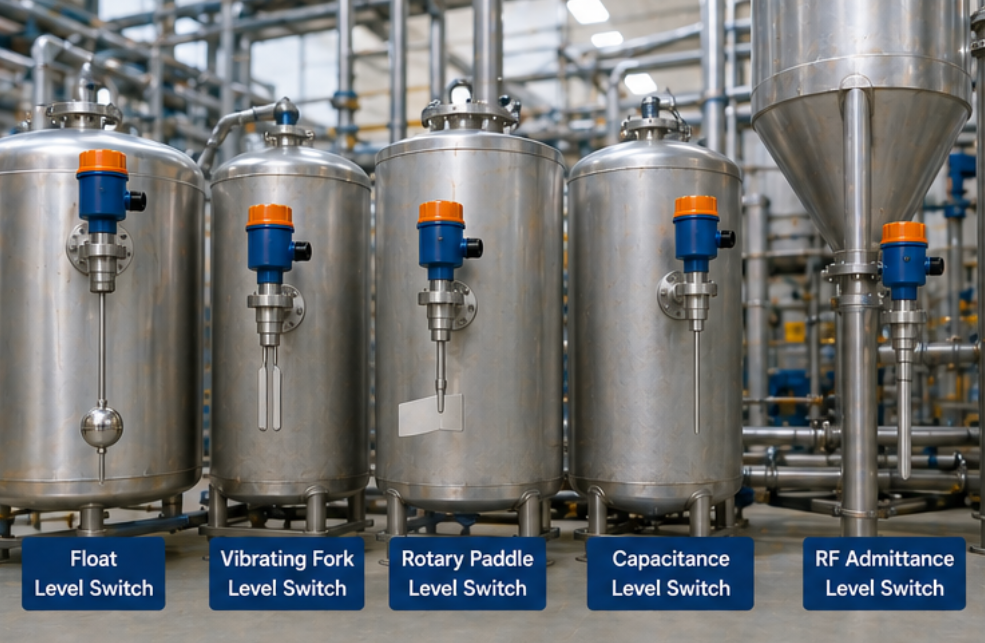
Why Level Switch Selection Matters
A level switch is a small device, but it plays an important role in industrial automation. It can send a signal when material reaches a defined high or low level. This signal may be used for alarm, pump protection, feeding control, overflow prevention or process interlock.
If the wrong level switch is selected, the system may experience false alarms, unstable signals, installation mismatch, short service life or even production shutdown. For overseas buyers, correct selection before ordering is more important than simply comparing prices.
1. Confirm Whether The Application Is A Tank Or A Silo
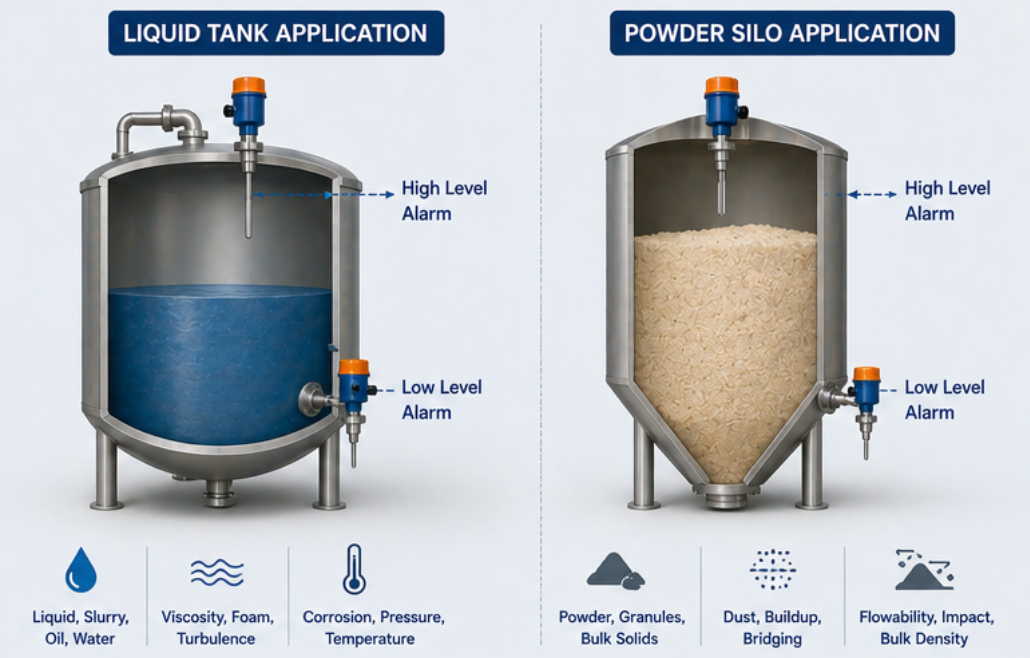
Tanks and silos usually require different selection logic. Tanks often store liquids, slurry, oil, water or chemical fluids. Silos usually store powder, granules, cement, flour, plastic pellets, feed, fly ash or bulk solids.
Liquid tanks require attention to viscosity, foam, turbulence, corrosion and pressure. Powder silos require attention to bulk density, dust, material buildup, bridging, flowability and material impact during filling.
2. Choose The Right Type Of Level Switch
Different level switch technologies are suitable for different materials and working conditions. Buyers should choose according to the actual application instead of using one model for all projects.
| Level Switch Type | Suitable Applications | Main Advantage |
|---|---|---|
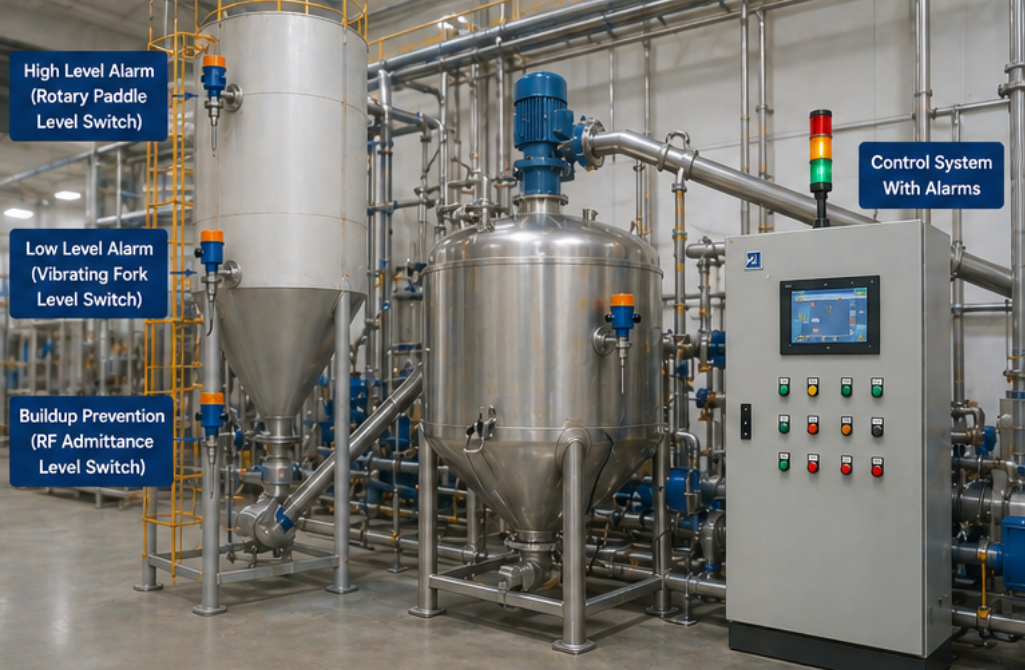
| Rotary Paddle Level Switch | Powder silos, granules, dry bulk solids | Economical and reliable for general silo alarms |
| Vibrating Fork Level Switch | Powders, granules, liquids, compact tanks | No rotating parts and stable point detection |
| Capacitance Level Switch | Liquids, powders and general materials | Flexible for multiple media types |
| RF Admittance Level Switch | Sticky, dusty or buildup-prone materials | Better anti-buildup and false alarm resistance |
| Float Level Switch | Clean liquids, water tanks, oil tanks | Simple structure and cost-effective liquid detection |
3. Match The Sensor With Material Conditions
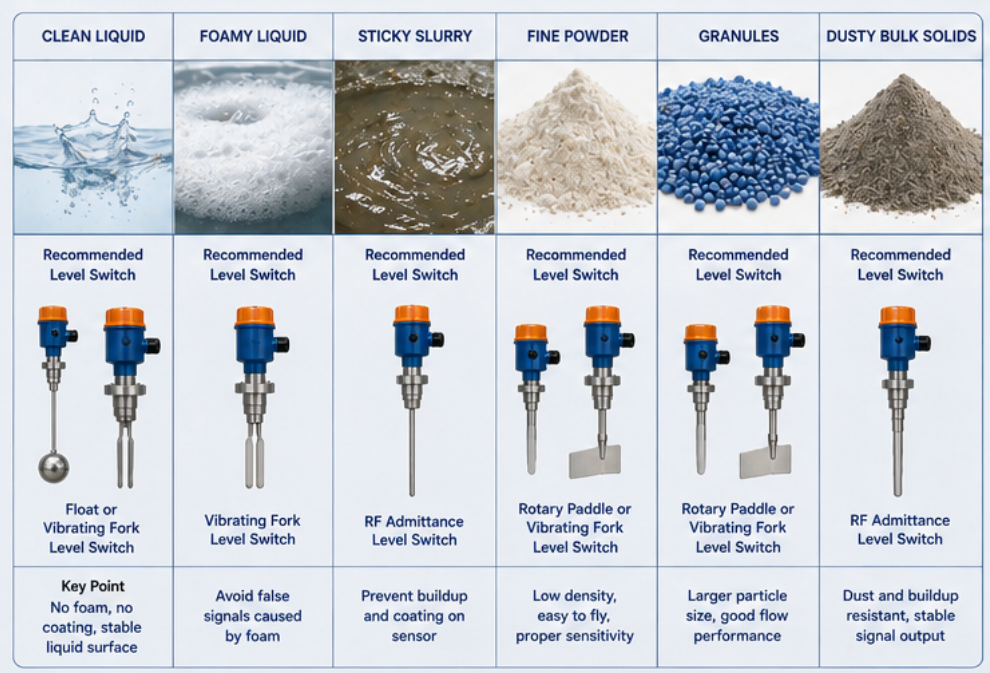
Material behavior has a direct effect on level switch performance. For powder and bulk solids, buyers should check density, particle size, dust, humidity and flowability. For liquids, buyers should check viscosity, foam, turbulence, corrosion and temperature.
Sticky or coating materials may cause false signals on standard sensors. Low-density powder may require more sensitive detection. Corrosive liquid may require stainless steel or special material contact parts.
4. Check Installation Position And Process Connection
Installation position is one of the most common causes of level switch problems. For high-level alarm, the switch should be installed near the upper control point. For low-level alarm, it should be installed near the lower process limit.
In silos, avoid direct filling streams and material impact zones. In tanks, avoid strong turbulence, pump suction areas and foam accumulation zones. Buyers should also confirm thread size, flange size, tank wall thickness, cable entry and available installation space.
Quick Selection Guide
For dry powder silos: choose rotary paddle or vibrating fork level switch.
For sticky or dusty silos: consider RF admittance level switch.
For clean liquid tanks: choose float, vibrating fork or capacitance level switch.
For chemical liquids: confirm corrosion resistance and process material.
For high or low alarm: confirm exact installation height before ordering.
For OEM projects: provide tank or silo drawings for accurate model selection.
What Buyers Should Provide Before Quotation
To recommend the right level switch, buyers should provide material name, tank or silo size, detection purpose, installation position, working temperature, pressure, density or viscosity, process connection, power supply and output signal.
If the application has dust, buildup, foam, corrosion, vibration or explosion-proof requirements, these details should be confirmed before quotation. This helps avoid wrong selection and reduces procurement risk.
Common Mistakes To Avoid
Using one level switch type for all tank and silo applications.
Choosing by price only without checking material behavior.
Ignoring dust, foam, buildup or corrosion conditions.
Installing the sensor directly in the filling stream or turbulent zone.
Not confirming thread, flange, voltage or output signal before ordering.
Final Recommendation
The right level switch depends on the material, tank or silo structure, detection purpose and working environment. Rotary paddle switches are practical for powder silos. Vibrating fork switches are suitable for many solids and liquids. Capacitance switches are flexible for general applications. RF admittance switches are better for sticky, dusty and buildup-prone materials.
Shao Level provides level switches and industrial level measurement products for tanks, silos, hoppers and automation systems. Correct model selection can help improve system reliability, reduce false alarms and support safer production.
Need Help Choosing A Level Switch For Tanks Or Silos?
Send us your material type, tank or silo size, installation position and working conditions. Shao Level can help recommend a suitable level switch solution for your project.
Contact Us / Get Quote