
How To Prevent False Alarms In Powder Silo Level Measurement
False alarms in powder silo level measurement can cause overflow risk, unnecessary shutdowns, feeding interruption and operator confusion. To prevent false signals, buyers need to consider material behavior, sensor type, installation position, dust, buildup and control system settings.
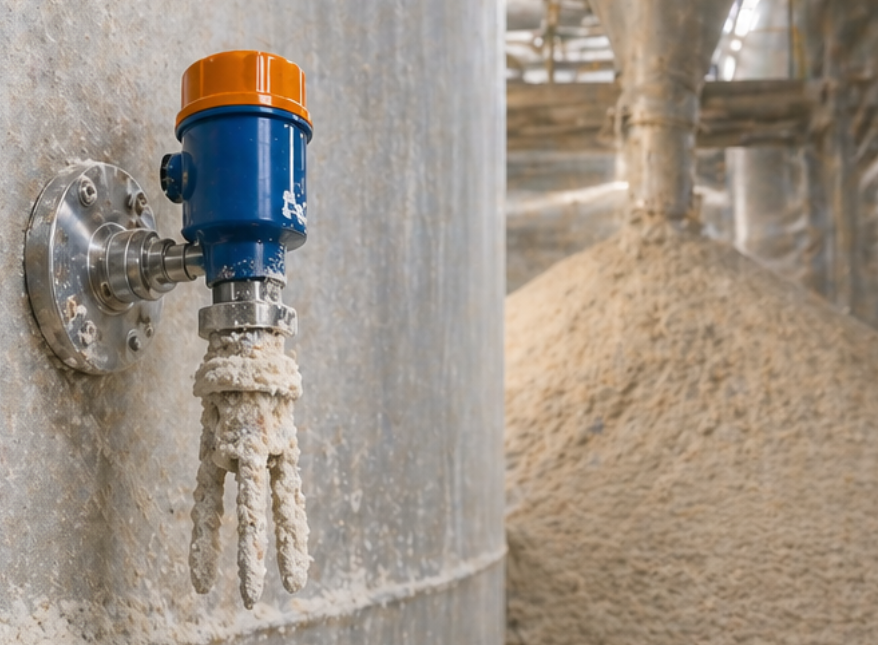
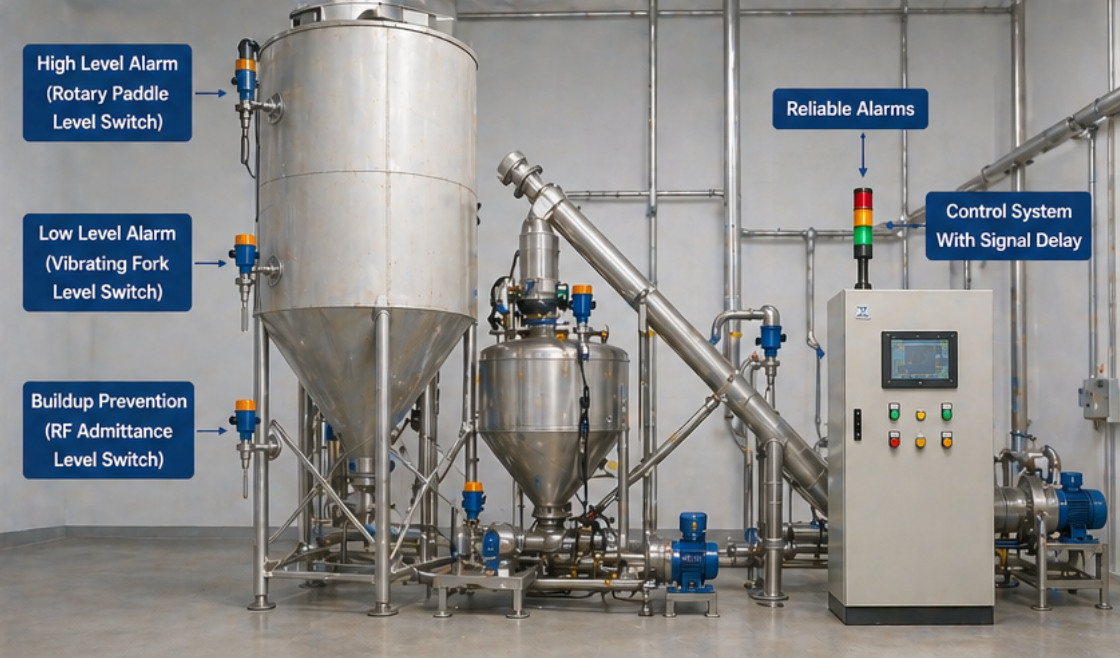
Get QuotePowder silos are more difficult to measure than liquid tanks. Powder does not always form a flat surface. It may create slopes, bridges, cavities, dust clouds and material buildup on the sensor. During filling or discharging, the material surface changes quickly and may temporarily cover or uncover the level switch. False alarms usually happen when the sensor cannot distinguish between real material level and temporary process interference. Common causes include wrong sensor selection, poor installation position, heavy dust, sticky buildup, vibration, unstable wiring or incorrect signal delay settings. Different powders require different level switch technologies. A sensor that works well for plastic granules may not work reliably for sticky flour, fine cement powder or fly ash. One of the most common causes of false alarms is wrong installation position. If the level switch is installed directly under the filling pipe, falling powder may hit the probe or paddle and trigger a false signal before the silo actually reaches the target level. For high-level detection, the sensor should be placed away from the main filling stream. For low-level detection, it should not be too close to the outlet where material flow may create cavities or unstable surfaces. In strong impact applications, a protective baffle can help reduce direct material impact. Fine powder dust may enter weak sealing structures, cover the sensor surface or cause unstable signals. Sticky powder may coat the probe, fork or paddle. When buildup becomes thick enough, the sensor may detect the coating as real material and send a false alarm. For dusty applications, choose a sensor with reliable sealing and suitable protection. For buildup-prone materials, RF admittance level switches are often more stable because they are designed to reduce the influence of coating on the probe. During silo filling, powder movement may temporarily touch the sensor. During discharge, material may briefly separate from the probe. If the control system reacts immediately, short contact or short signal loss may become a false alarm. A proper signal delay can help filter temporary disturbances. For example, the control system can be set to confirm the signal only after the level switch remains triggered for several seconds. This helps improve alarm reliability without changing the sensor hardware. Confirm powder type, density, dust level and buildup tendency. Choose the correct level switch technology for the material. Avoid direct filling stream and strong material impact areas. Use protective baffles when impact is unavoidable. Check sealing, housing protection and shaft/probe design. Use proper signal delay to filter temporary disturbances. Inspect wiring, power supply and output signal compatibility. Clean or inspect the sensor regularly in sticky powder applications. To reduce false alarms, buyers should provide the material name, bulk density, particle size, dust level, moisture, silo size, filling method, discharge method, installation position, power supply, output signal and environmental conditions. If false alarms already happen in an existing silo, photos of the current installation position, wiring cabinet and sensor model can help the manufacturer identify the possible cause and recommend a better solution. Preventing false alarms in powder silo level measurement requires a complete view of the application. The sensor type, installation position, material condition, sealing design and control logic all matter. For standard dry powder applications, rotary paddle or vibrating fork level switches may be sufficient. For dusty, sticky or buildup-prone materials, RF admittance level switches can provide better stability. The best solution should be selected based on the real silo condition, not only by price. Send us your powder type, silo size, installation position and current alarm problem. Shao Level can help recommend a suitable level switch solution for more stable powder silo detection.
Why False Alarms Happen In Powder Silos
1. Choose A Sensor Suitable For The Powder
Powder Condition Possible Problem Recommended Consideration Dry, free-flowing powder Normal level detection Rotary paddle or vibrating fork switch Fine dusty powder Dust cloud causes unstable signal Better sealing and proper signal delay Sticky or coating powder Buildup causes false material detection RF admittance level switch Low-density powder Sensor may not trigger reliably High-sensitivity model or suitable probe/paddle 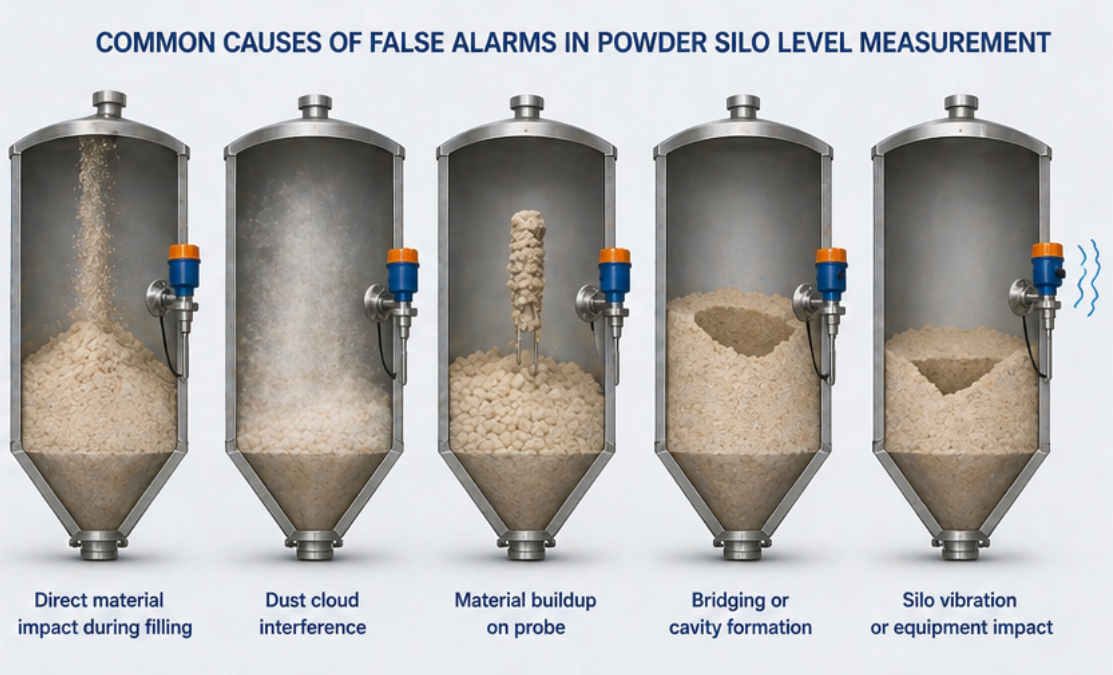
2. Avoid Installing The Sensor In The Material Impact Zone
3. Control Dust And Buildup Problems
4. Use Proper Signal Delay And Control Logic
False Alarm Prevention Checklist
What Buyers Should Provide Before Quotation
Final Recommendation
Need Help Reducing False Alarms In Powder Silo Level Measurement?