
How To Select A Level Switch For Plastic Granules And Pellets
Plastic granules and pellets are widely used in injection molding, extrusion, plastic recycling and material conveying systems. Choosing the right level switch can help prevent hopper overflow, material shortage, feeding interruption and unstable production.
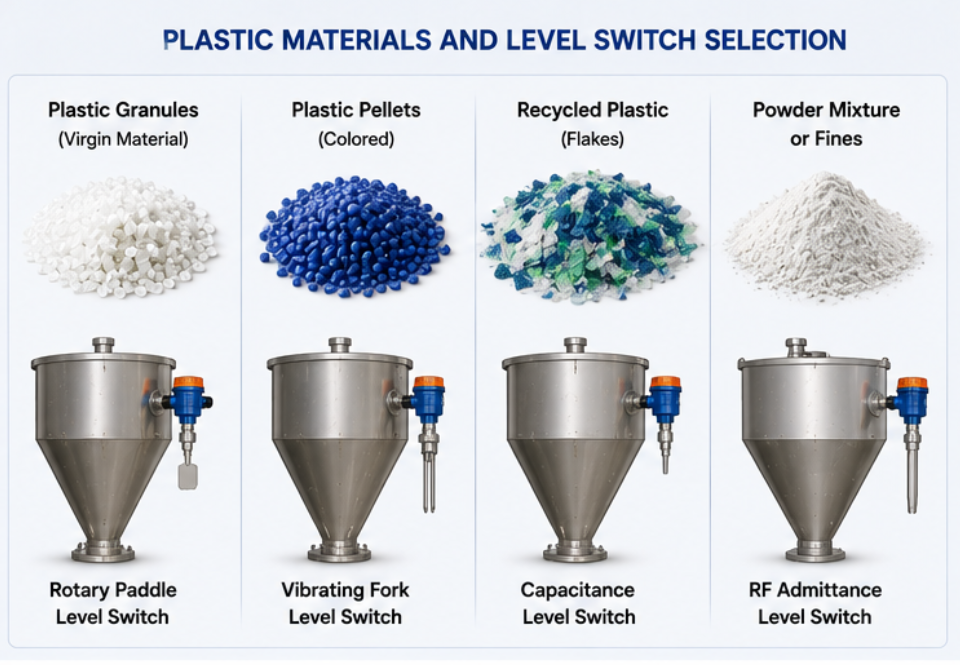
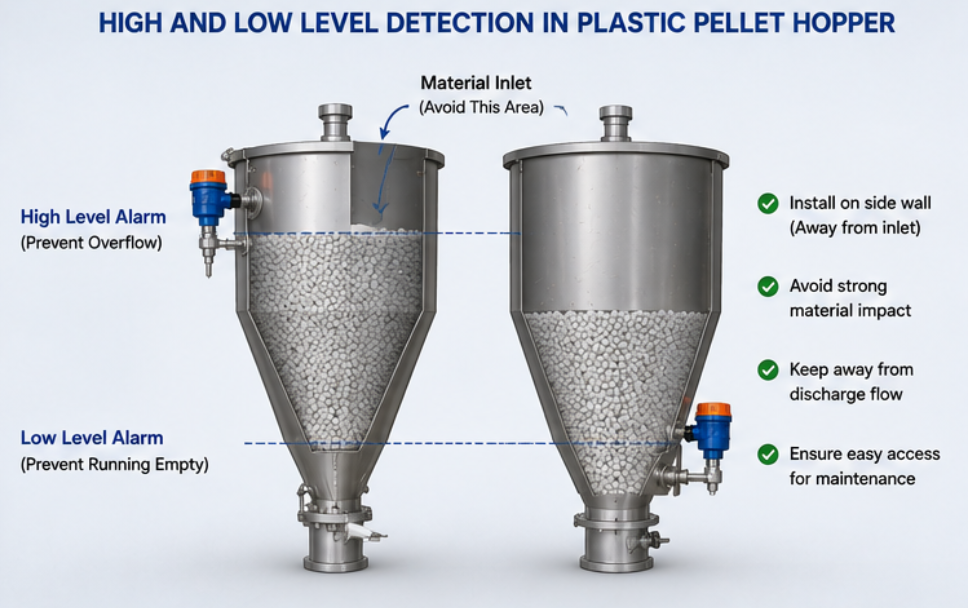
Get QuotePlastic granules usually flow better than fine powder, but they still create level detection challenges. Different pellet sizes, material impact during feeding, static electricity, hopper shape and vibration can all affect sensor performance. In plastic processing systems, level switches are commonly used for high-level alarm, low-level alarm, material presence detection and automatic feeding control. A reliable level switch helps keep production stable and reduces material handling problems. Before selecting a level switch, buyers should confirm the actual plastic material and pellet behavior inside the hopper or silo. Pellet size: larger pellets may require different paddle or probe design. Bulk density: affects sensitivity and mechanical response. Flowability: free-flowing pellets are easier to detect than irregular recycled flakes. Static electricity: may affect some sensor applications. Dust or fines: recycled pellets may contain powder or dust. Plastic granule applications usually need simple, stable and durable point level detection. Different level switch types can be selected according to hopper size, pellet flow and automation requirements. For plastic granule hoppers, the level switch should be installed at the correct control point. High-level switches are used to prevent overflow during feeding. Low-level switches are used to prevent material shortage and protect downstream equipment. Avoid installing the sensor directly under the material inlet. Falling pellets may impact the probe or paddle and cause false signals. For pneumatic conveying systems, buyers should also avoid areas with strong material flow or unstable granule movement. Plastic processing systems often include vacuum loaders, storage hoppers, dryers, mixers, extruders and injection molding machines. The level switch should match the control system and automation logic. Power supply: AC or DC Output signal: relay, PNP, NPN or other signal Thread or flange connection PLC or control cabinet compatibility Cable routing and wiring protection Signal delay requirement for stable feeding control Confirm plastic material type and pellet size. Check whether the material is granule, pellet, flake or powder mixture. Confirm high-level alarm, low-level alarm or feeding control purpose. Avoid direct material inlet and impact zones. Choose suitable rotary paddle, vibrating fork or capacitance type. Confirm process connection and installation space. Match output signal with PLC or control cabinet. Provide hopper drawings or application photos before quotation. To recommend the right level switch for plastic granules and pellets, buyers should provide material type, pellet size, bulk density, hopper size, installation position, high-level or low-level purpose, feeding method, power supply, output signal and process connection. For OEM equipment manufacturers or plastic processing lines, drawings and installation photos can help improve model selection accuracy and reduce integration problems. For most plastic granule and pellet applications, rotary paddle level switches and vibrating fork level switches are practical choices. Rotary paddle type is economical for bulk solid detection, while vibrating fork type is suitable for compact hoppers and low-wear applications. Shao Level provides rotary paddle level switches, vibrating fork level switches, capacitance level switches, RF admittance level switches and other industrial level measurement products for plastic granule hoppers, storage silos and automatic feeding systems. Send us your plastic material type, hopper size and control requirements. Shao Level can help recommend a suitable level switch solution.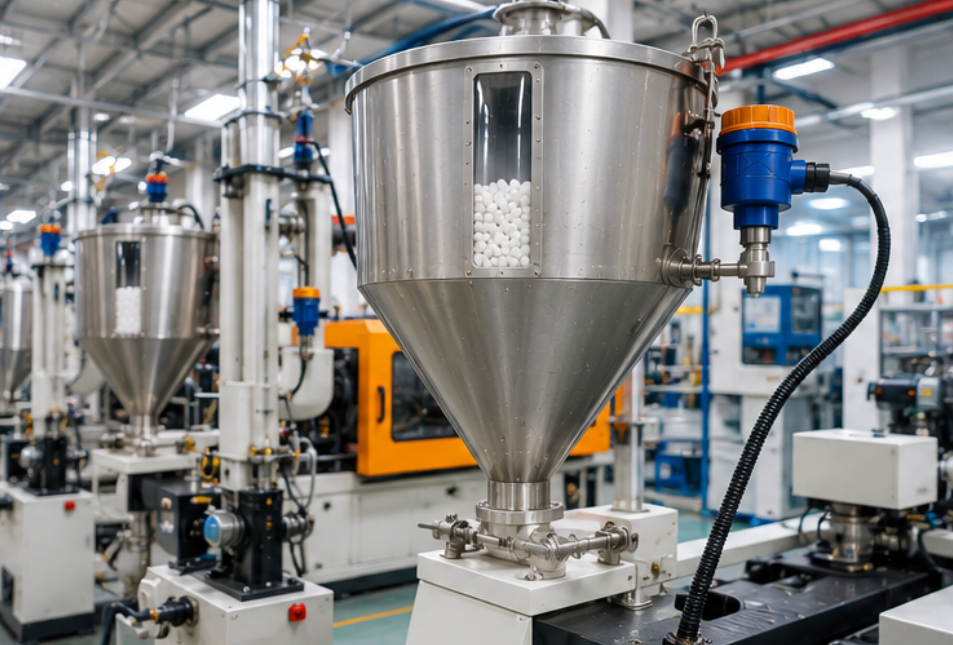
Why Plastic Granule Level Detection Matters
1. Confirm The Plastic Material And Pellet Condition
2. Choose The Right Level Switch Type
Level Switch Type Suitable Application Main Advantage Rotary Paddle Level Switch Plastic pellet hoppers and storage bins Economical and reliable for bulk solids Vibrating Fork Level Switch Compact hoppers and automated feeding systems No rotating parts and stable signal Capacitance Level Switch Granules, powder mixtures and plastic material systems Flexible for different material conditions RF Admittance Level Switch Dusty recycled pellets or coating materials Better anti-buildup performance 3. Select The Correct Installation Position
4. Check Integration With Feeding And Control Systems
Plastic Granule Level Switch Checklist
What Buyers Should Provide Before Quotation
Final Recommendation
Need A Level Switch For Plastic Granules Or Pellets?