
How To Select A Level Switch For Sticky, Dusty Or Coating Materials
Sticky, dusty and coating materials are difficult for level detection because they may cover the probe, block the paddle, create false signals or cause unstable alarms. Choosing the right level switch requires careful evaluation of material behavior, buildup risk, installation position and sensor technology.
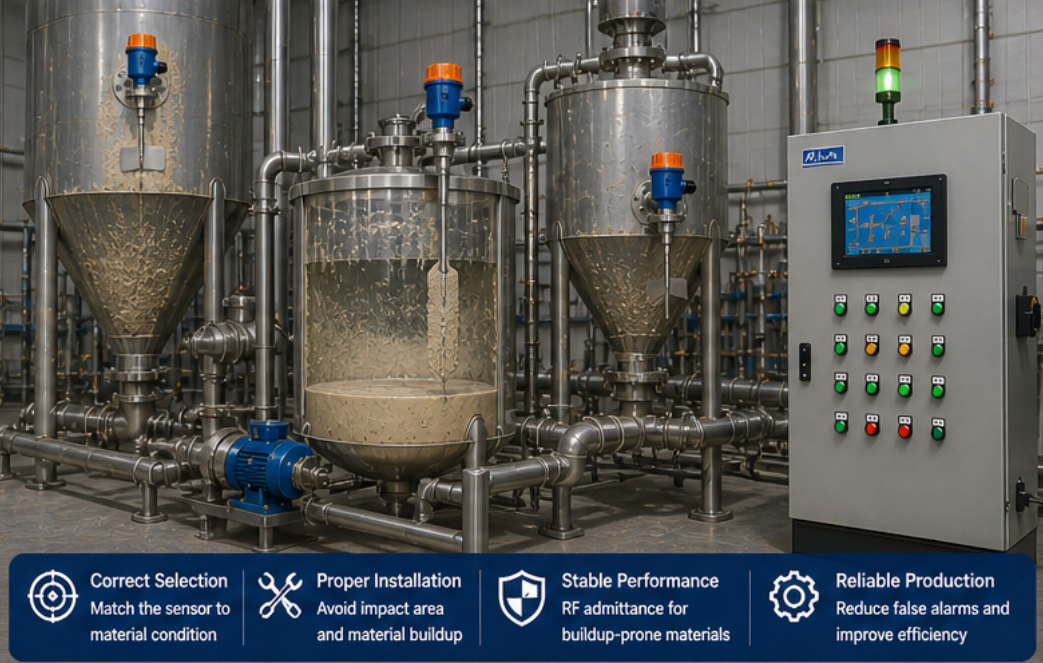
Get QuoteStandard level switches may work well in clean liquids or dry free-flowing powders. However, sticky, dusty or coating materials can create more complex problems. Fine dust may enter weak sealing structures. Sticky powder may build up on the probe. Slurry or wet material may coat the sensor surface and trigger false alarms. In these applications, the sensor must detect the real material level instead of detecting temporary dust clouds, coating layers or material residue. Before selecting a level switch, buyers should clearly identify what type of problem the material creates. For sticky or coating materials, RF admittance level switches are often more suitable than standard capacitance switches because they are designed to reduce the influence of probe coating. They can help distinguish between real material level and buildup on the probe surface. Rotary paddle level switches can be used for many dry powders, but sticky materials may block the paddle or create residue around the shaft. Vibrating fork level switches are compact and have no rotating paddle, but coating on the fork may still affect performance in difficult applications. In sticky or dusty applications, installation position is just as important as sensor type. Avoid installing the switch directly under the filling pipe, near material impact zones or in areas where material easily accumulates. For silos and hoppers, choose a position that represents the real material level. For tanks with coating liquids or slurry, avoid dead zones, heavy turbulence and areas where residue may remain after discharge. Confirm whether the material is sticky, dusty, humid or coating. Check material density, viscosity, particle size and flowability. Choose RF admittance for serious buildup or false signal problems. Avoid direct filling stream and material impact zones. Confirm sealing, housing protection and cable entry design. Use proper signal delay to reduce temporary false alarms. Provide photos or drawings for difficult applications. To select the correct level switch, buyers should provide material name, density, viscosity, dust level, humidity, buildup condition, tank or silo size, installation position, working temperature, pressure, power supply, output signal and process connection. If false signals already happen, photos of the current sensor, material buildup and installation point can help identify the cause and recommend a better model. For sticky, dusty or coating materials, buyers should not choose a level switch only by price. The correct sensor should reduce buildup influence, resist dust, match the material behavior and provide stable signal output. Shao Level provides RF admittance level switches, rotary paddle level switches, vibrating fork level switches, capacitance level switches and other industrial level measurement products for tanks, silos and automation systems. Send us your material type, buildup condition, tank or silo structure and installation details. Shao Level can help recommend a more reliable level switch solution.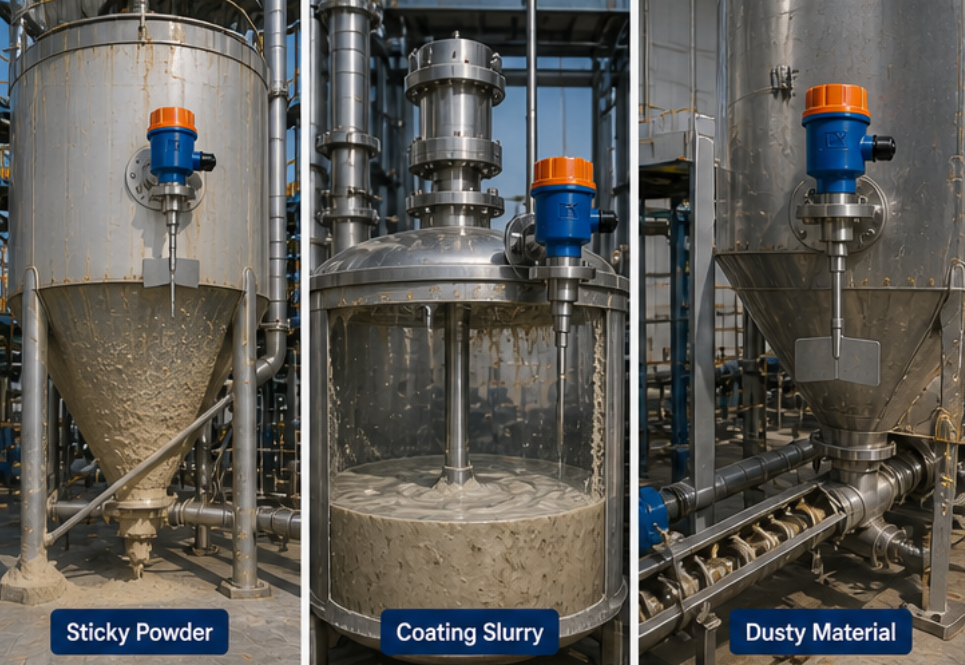
Why Sticky And Dusty Materials Are Difficult To Detect
1. Identify The Material Problem First
Material Condition Common Risk Selection Focus Sticky Powder Buildup on probe or paddle Anti-buildup performance Fine Dust False signal and sealing failure Sealing, housing protection, signal delay Coating Liquid Or Slurry Sensor surface coating Probe design and coating compensation Humid Powder Material bridging and residue Installation position and cleaning access 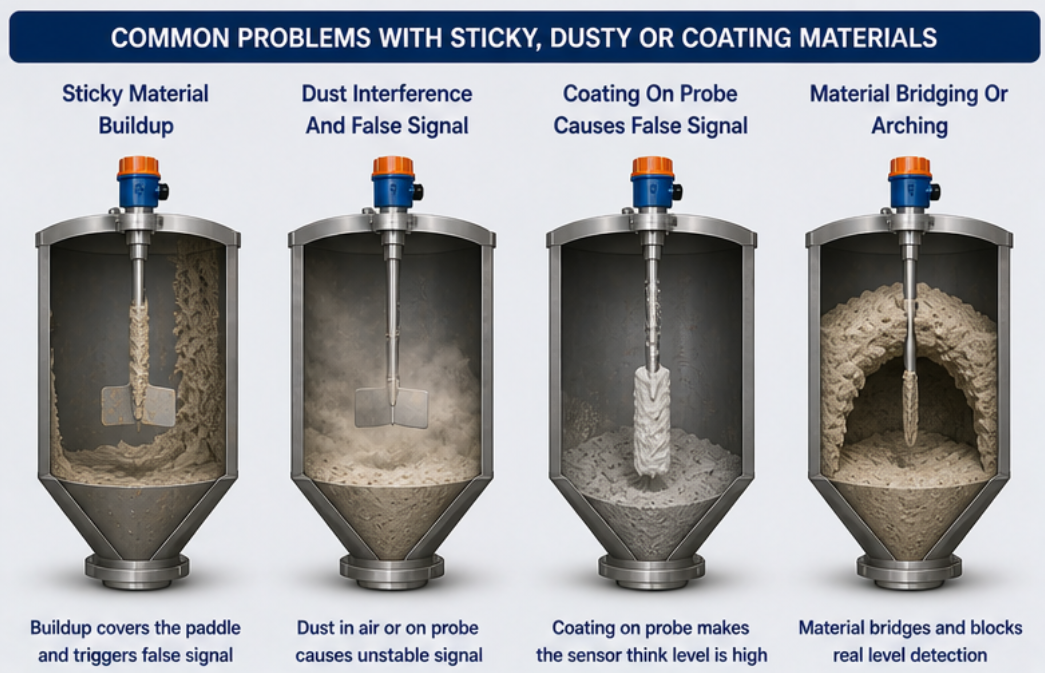
2. Choose A Level Switch With Anti-Buildup Capability
3. Compare Suitable Level Switch Types
Level Switch Type Suitable For Limitation RF Admittance Level Switch Sticky, dusty, coating and buildup-prone materials Higher cost than basic models Rotary Paddle Level Switch Dry powders and free-flowing bulk solids Not ideal for heavy coating or sticky buildup Vibrating Fork Level Switch Powder, granules and some liquids Coating may affect vibration stability Capacitance Level Switch Clean liquids and general materials May be affected by probe coating 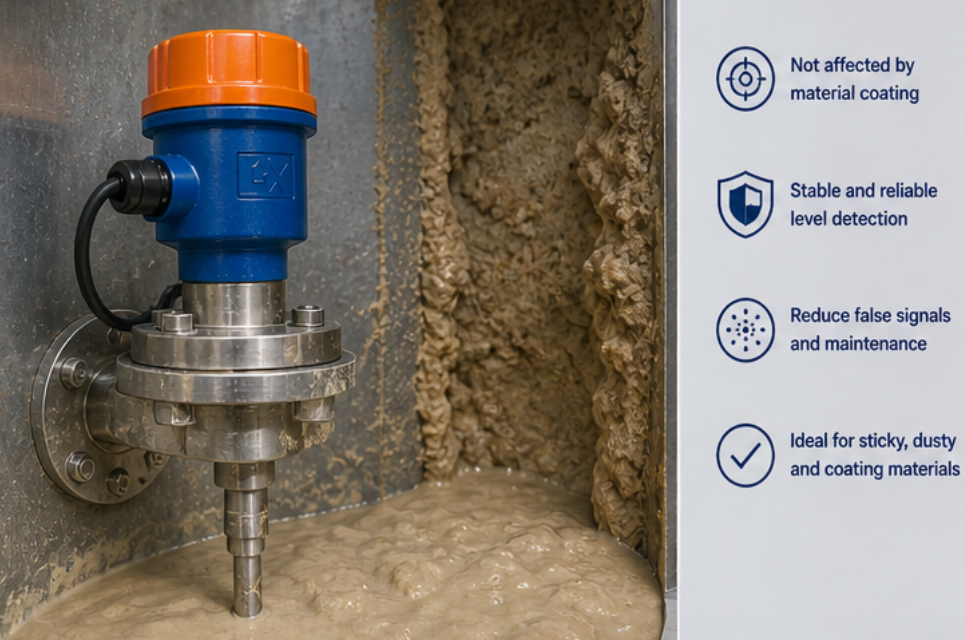
4. Select The Right Installation Position
Selection Checklist
What Buyers Should Provide Before Quotation
Final Recommendation
Need Help Selecting A Level Switch For Difficult Materials?