
Level Switch Maintenance Guide: How To Reduce False Alarms And Downtime
Level switches are small devices, but they directly affect production safety and automation stability. Proper maintenance can reduce false alarms, prevent unexpected downtime and extend the service life of level switches used in tanks, silos, hoppers and bulk material handling systems.
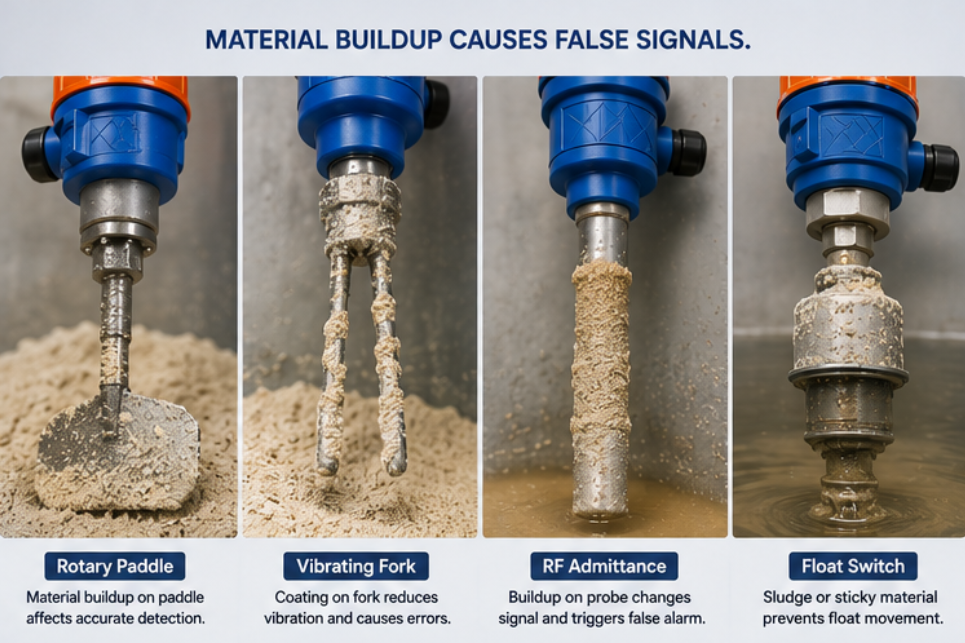
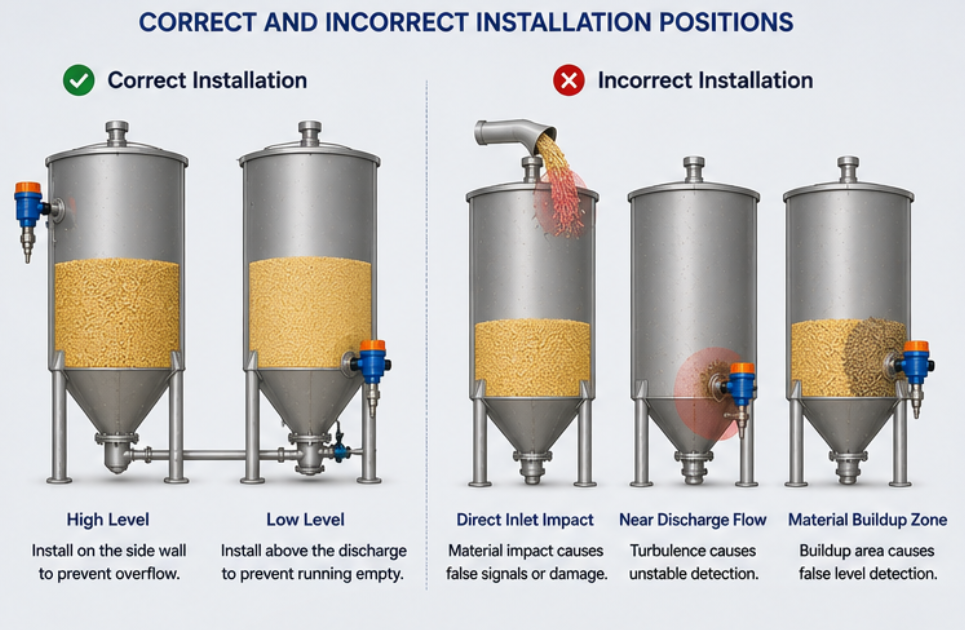
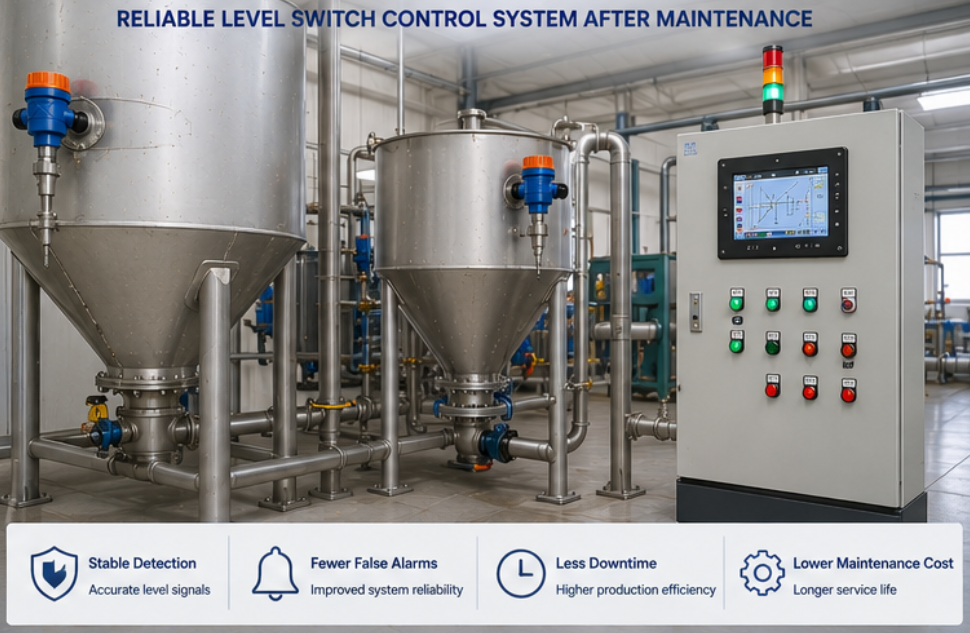
Get QuoteFalse alarms often happen when the level switch is affected by material buildup, dust, vibration, wrong installation position, unstable wiring or incorrect control settings. If these problems are not checked regularly, the system may stop unexpectedly or send unreliable level signals. Regular maintenance helps operators identify problems early, reduce emergency shutdowns and keep the level measurement system working reliably. Material buildup is one of the most common causes of false level signals. Sticky powder, humid bulk solids, slurry, sludge and coating materials may remain on the probe, paddle, fork or float after the real material level changes. Inspect the probe, paddle, fork or float regularly. Clean material residue before it becomes thick buildup. Check whether buildup appears repeatedly in the same area. Consider RF admittance level switches for serious coating problems. In powder silos and dusty industrial areas, dust may enter weak sealing structures or cable entries. This can affect internal components, wiring safety and long-term performance. Buyers should check the housing seal, cable gland, wiring entry and protection grade. For outdoor silos or hazardous dust areas, sealing and explosion-proof requirements should be confirmed carefully. Some false alarms are caused by poor installation rather than sensor failure. A level switch installed directly under a material inlet may be hit by falling powder, pellets or liquid flow. A switch installed near pump suction, agitators or discharge zones may receive unstable signals. During maintenance, check whether the actual material flow has changed over time. If the sensor is often affected by impact, turbulence or buildup, repositioning may be necessary. Loose wiring, incorrect grounding, unstable power supply or electrical interference can create false signals. This is especially common in factories with motors, conveyors, pumps and large automation equipment. Check whether wiring terminals are loose. Confirm AC or DC power supply stability. Verify relay, PNP, NPN or other output signal. Check grounding and shielding when electrical noise exists. Confirm signal compatibility with PLC or control cabinet. In some applications, the material may temporarily touch the sensor during filling or briefly leave the sensor during discharge. If the control system reacts immediately, short disturbances may become false alarms. A proper signal delay can help filter temporary disturbances. The system can be set to confirm the signal only after the level switch remains triggered for a certain period. Clean buildup from the probe, paddle, fork or float. Check dust sealing, cable entry and housing protection. Inspect whether installation position is affected by material impact. Check wiring terminals, grounding and power supply. Verify output signal compatibility with the control system. Use proper signal delay to reduce temporary false alarms. Record false alarm frequency and operating conditions. Replace unsuitable sensor types in difficult applications. If false alarms continue after cleaning, rewiring and installation adjustment, the level switch type may not be suitable for the material. For example, sticky or coating materials may require RF admittance technology instead of standard capacitance or mechanical switches. If the working environment has changed, such as higher dust, more moisture, different material density or new safety requirements, buyers should re-evaluate the model selection. Reducing false alarms and downtime requires both proper maintenance and correct level switch selection. Cleaning, sealing inspection, wiring checks and control logic adjustment can solve many common problems. However, difficult materials may need a more suitable sensor technology. Shao Level provides rotary paddle level switches, vibrating fork level switches, RF admittance level switches, capacitance level switches and other industrial level measurement products for tanks, silos, hoppers and automation systems. Send us your material type, installation photos and false alarm problem details. Shao Level can help recommend a suitable level switch solution.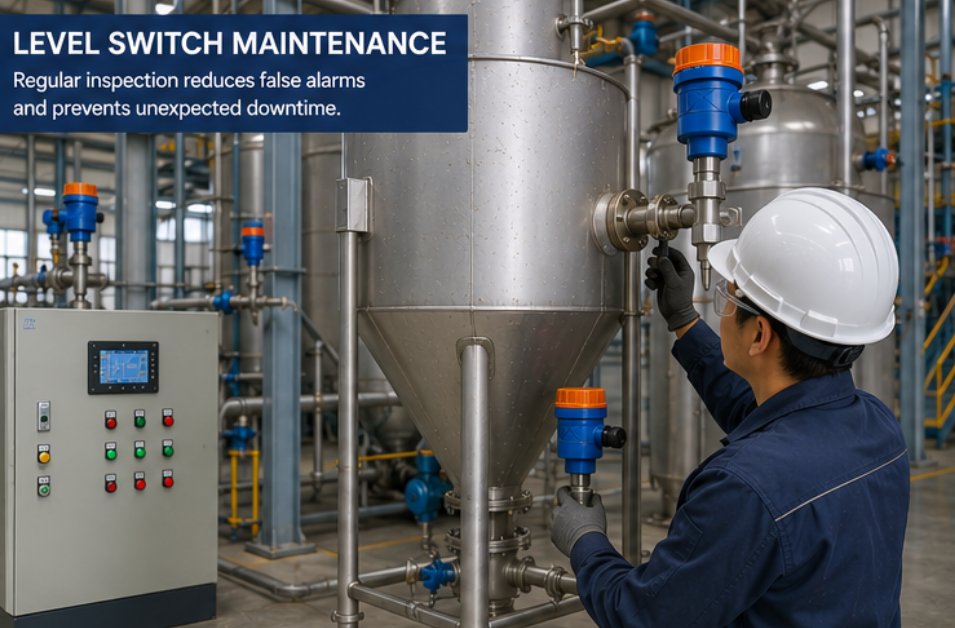
Why Level Switch Maintenance Matters
1. Check Material Buildup On The Sensor
2. Inspect Dust, Sealing And Cable Entry
3. Verify Installation Position
4. Check Electrical Wiring And Output Signal
5. Adjust Signal Delay And Control Logic
Level Switch Maintenance Checklist
When Should You Replace The Level Switch?
Final Recommendation
Need Help Reducing Level Switch False Alarms?