
Level Switch Selection Guide For OEM Equipment Manufacturers
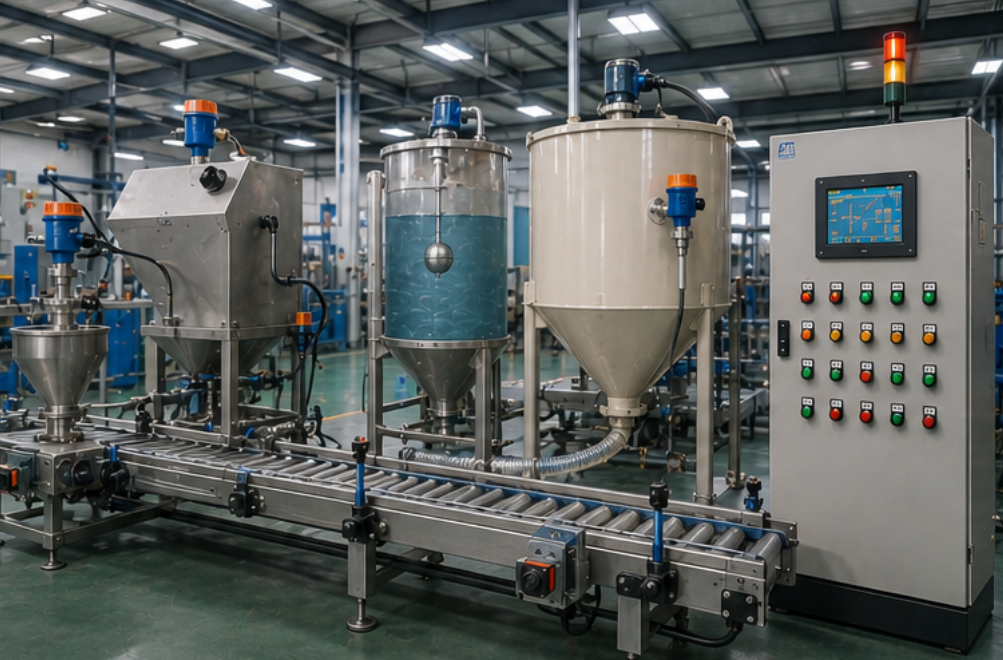
OEM equipment manufacturers often integrate level switches into powder handling systems, liquid tanks, silos, hoppers and automated production equipment. Choosing the correct level switch can improve system stability, reduce maintenance and simplify equipment integration.
Get Quote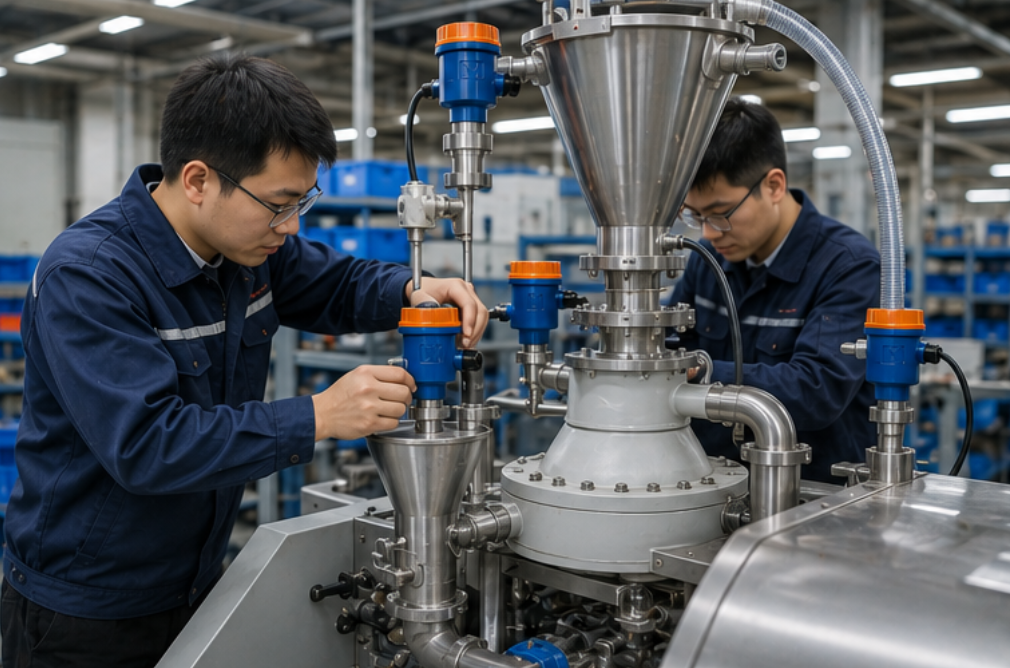
Why OEM Equipment Manufacturers Need Stable Level Detection
OEM systems often require reliable point level detection for automation control, overflow prevention, low-level protection and process interlock. A level switch failure inside an OEM machine may stop the entire production line or create unnecessary service costs.
Compared with end users, OEM manufacturers usually care more about compact installation, stable signal output, long-term consistency, easy wiring and compatibility with PLC or control systems.
1. Understand The Material Inside The Equipment
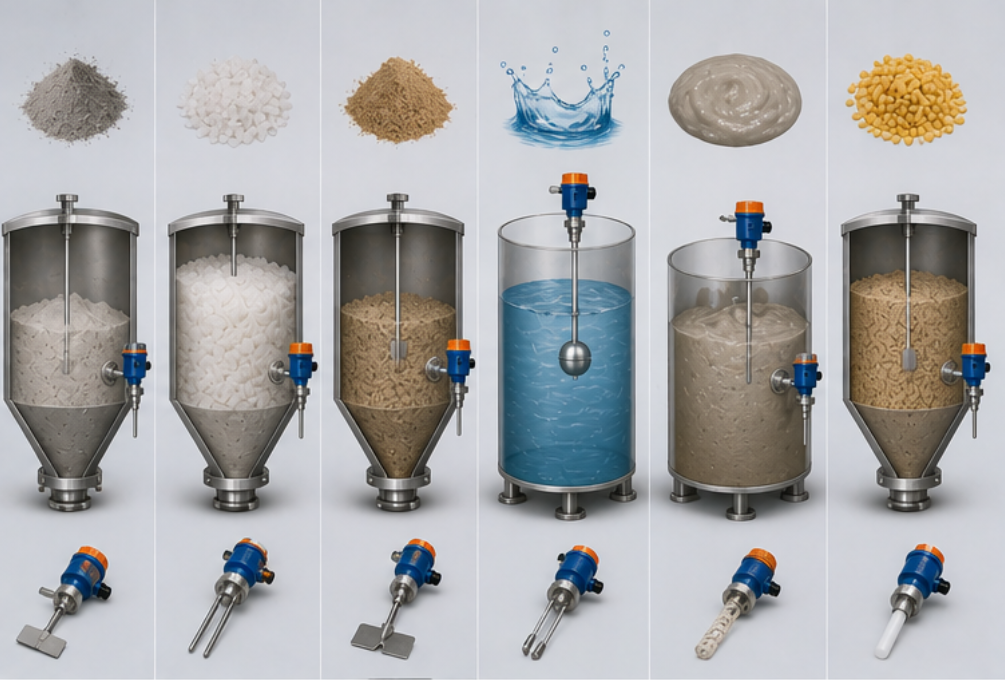
The first step is understanding the material condition. OEM equipment may handle powder, granules, slurry, liquids or mixed materials.
Dry powder and bulk solids
Plastic pellets and granules
Sticky powder or coating material
Water, oil or chemical liquid
Food powder or pharmaceutical materials
Dusty or abrasive industrial materials
Different materials require different level switch technologies. Incorrect selection may create false alarms or unstable equipment performance.
2. Choose The Right Level Switch Technology
| Level Switch Type | OEM Equipment Application | Main Advantage |
|---|---|---|
| Rotary Paddle Level Switch | Powder hoppers and bulk solid systems | Economical and reliable for dry materials |
| Vibrating Fork Level Switch | Compact OEM equipment and tanks | No rotating parts and stable signal |
| RF Admittance Level Switch | Sticky or buildup-prone materials | Better anti-coating performance |
| Capacitance Level Switch | General liquid and powder systems | Flexible integration options |
| Float Level Switch | Water tanks and clean liquid equipment | Simple structure and cost-effective |
3. Consider OEM Installation Space And Mechanical Structure
OEM equipment usually has more compact installation conditions than large industrial silos. Buyers should check mounting direction, available space, cable routing and sensor dimensions before selecting the model.
For compact hoppers or enclosed machines, vibrating fork level switches are often preferred because they require less installation space and have no rotating paddle structure.
4. Check PLC And Control System Compatibility
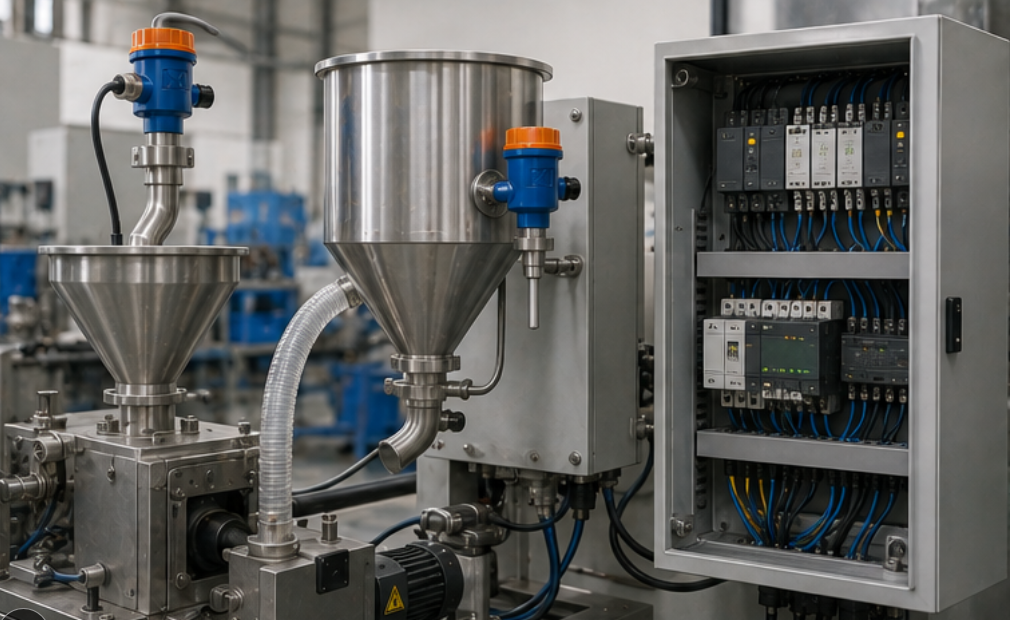
OEM manufacturers usually integrate level switches into PLC or automation systems. Electrical compatibility is extremely important for stable equipment operation.
AC or DC power supply
Relay, PNP or NPN output signal
Signal delay requirement
PLC input compatibility
Cable entry and wiring space
Noise resistance and grounding
Incorrect signal matching may create unstable alarms or control system communication problems.
5. Think About Long-Term Maintenance And Reliability
OEM equipment manufacturers should not focus only on initial cost. Long-term reliability directly affects equipment reputation and after-sales service costs.
For difficult materials with dust or buildup, selecting a more suitable sensor at the beginning may reduce customer complaints and maintenance work later.
OEM Level Switch Selection Checklist
Confirm material type and process condition.
Check installation space and mounting direction.
Choose sensor type according to material behavior.
Confirm PLC and control system compatibility.
Check signal output and power supply.
Evaluate dust, buildup and maintenance conditions.
Request drawings or samples for customized OEM projects.
What OEM Manufacturers Should Provide Before Quotation
To recommend the correct level switch, suppliers usually need material information, equipment drawings, hopper or tank dimensions, installation position, control system details, power supply, output signal and environmental conditions.
For customized equipment, 3D drawings or installation photos can help improve model matching and integration efficiency.
Final Recommendation
OEM equipment manufacturers need more than a basic level switch. The ideal solution should match the material, fit the equipment structure, integrate smoothly with the control system and provide stable long-term operation.
Shao Level provides rotary paddle level switches, vibrating fork level switches, RF admittance level switches, capacitance level switches and other industrial level measurement products for OEM automation equipment, tanks, silos and process systems.
Need A Level Switch Solution For OEM Equipment?
Send us your equipment drawings, material details and control system requirements. Shao Level can help recommend a suitable OEM level switch solution.
Contact Us / Get Quote