
RF Admittance Level Switch Buying Guide For Sticky Materials
Sticky materials can easily build up on sensor probes and cause false signals. An RF admittance level switch is often a better choice for sticky powder, slurry, humid bulk solids and coating materials because it can reduce the influence of material buildup and improve level detection stability.
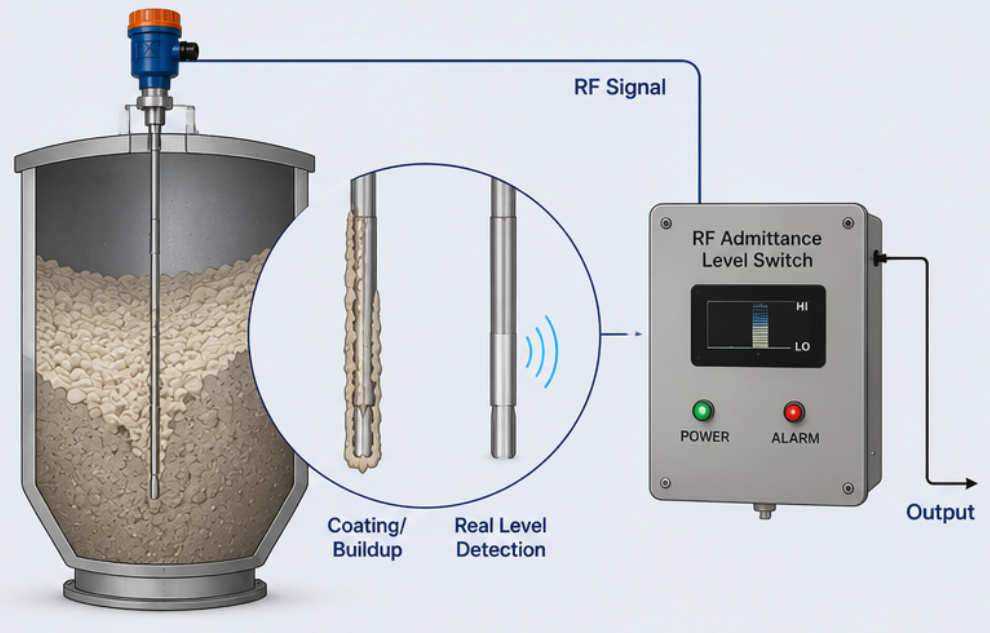
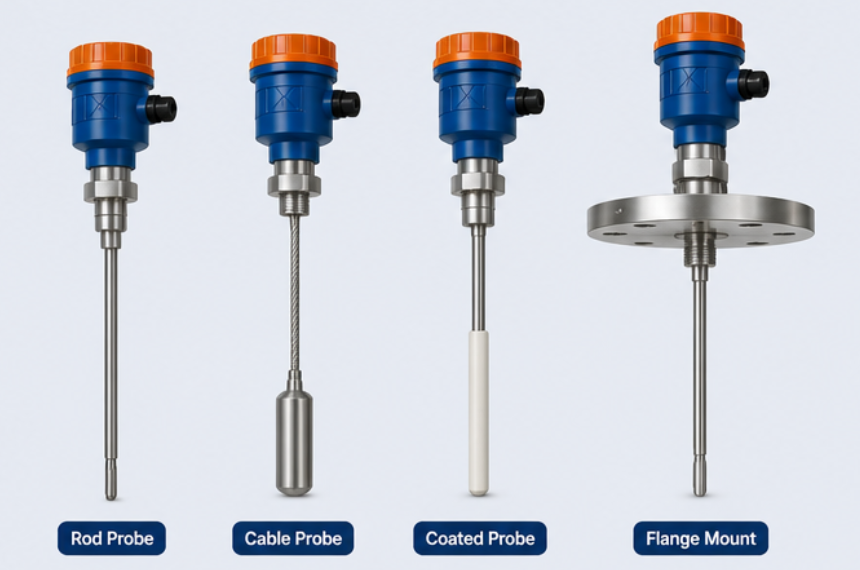
Get QuoteSticky materials are difficult because they do not simply touch the sensor and leave. They may coat the probe, bridge around the installation point, form residue on the vessel wall or create a false high-level signal even when the real material level has already dropped. Common sticky materials include wet powder, humid flour, sludge, slurry, chemical paste, adhesive powder, fly ash with moisture and food powders with poor flowability. In these applications, standard capacitance or mechanical level switches may require frequent cleaning or may trigger false alarms. RF admittance level switches use radio frequency technology to detect changes in electrical admittance between the probe and the vessel wall. Compared with standard capacitance switches, RF admittance technology is better at reducing the influence of coating on the probe. This makes it suitable for applications where material residue may remain on the probe surface after filling or discharge. The sensor can help distinguish between actual material level and unwanted buildup, reducing false signals in difficult process conditions. Before buying an RF admittance level switch, buyers should confirm how the sticky material behaves inside the tank, silo or hopper. The probe is the key contact part of an RF admittance level switch. For sticky materials, the probe should be selected according to material viscosity, buildup condition, tank size and installation depth. Buyers should confirm whether the application needs a rod probe, cable probe, coated probe or customized probe length. Process connection should also match the equipment structure, such as thread, flange or customized mounting. Even with RF admittance technology, installation position is still important. The switch should be installed where it can detect the real material level, not temporary material flow, splashing, dust cloud or residue accumulation. Avoid direct filling impact, strong turbulence, discharge dead zones and positions where material naturally sticks after every cycle. For sticky hoppers or slurry tanks, installation photos or drawings can help the supplier recommend a better mounting point. Confirm material name, density, viscosity and moisture. Check whether the material is sticky, coating or corrosive. Confirm buildup thickness and false signal history. Choose suitable probe type, probe length and probe material. Confirm thread, flange or customized process connection. Avoid direct filling impact and heavy residue areas. Match power supply and output signal with the control system. Check temperature, pressure and explosion-proof requirements. To recommend the right RF admittance level switch, buyers should provide the material name, viscosity or density, buildup condition, tank or silo size, installation position, working temperature, pressure, process connection, power supply and output signal. If the current level switch already has false alarm problems, photos of the sensor buildup, tank structure and installation position can help identify the cause and improve model selection. For sticky materials, the cheapest level switch is often not the most reliable option. RF admittance level switches are more suitable when buildup, coating and false signals are common problems. Correct probe selection, installation position and electrical compatibility are essential for long-term stable operation. Shao Level provides RF admittance level switches, rotary paddle level switches, vibrating fork level switches and other industrial level measurement products for sticky powders, slurry, tanks, silos, hoppers and automation systems. Send us your sticky material details, buildup condition and installation requirements. Shao Level can help recommend a suitable RF admittance level switch solution.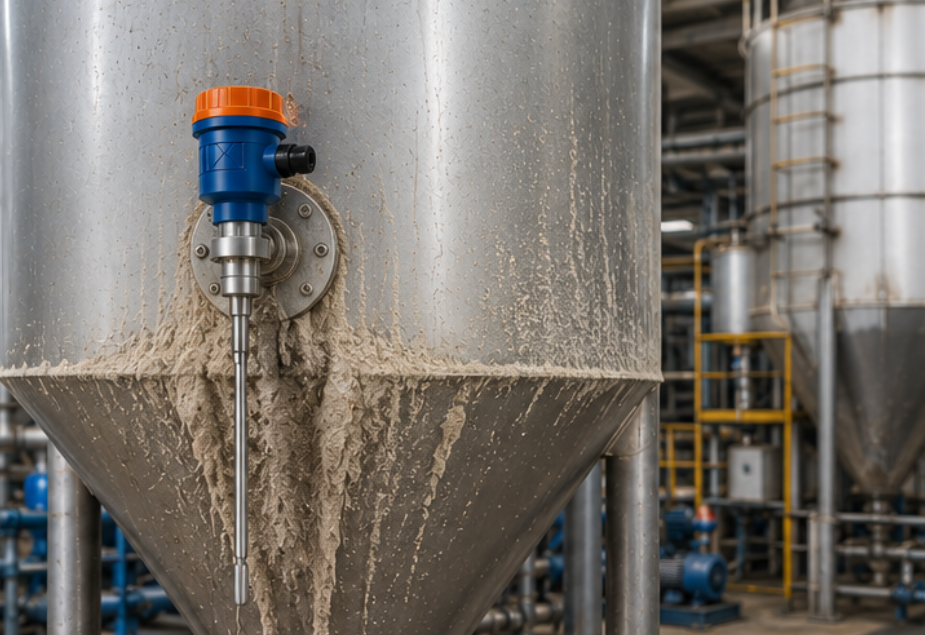
Why Sticky Materials Are Difficult For Level Detection
1. Understand How RF Admittance Helps Reduce Buildup Problems
2. Confirm The Sticky Material Characteristics
Material Information Why It Matters Material name Determines whether RF admittance is suitable Density or viscosity Affects probe selection and sensitivity Moisture content Higher moisture may increase coating and bridging Buildup thickness Helps evaluate anti-coating requirement Corrosion condition Determines probe material and process connection 3. Choose The Right Probe And Process Connection
4. Select The Correct Installation Position
RF Admittance Buying Checklist
What Buyers Should Provide Before Quotation
Final Recommendation
Need An RF Admittance Level Switch For Sticky Materials?